



Foto: Pražská integrovaná doprava
Over the next three years, six new tram lines will be constructed in Prague, set to benefit more than 150,000 passengers daily. This move not only addresses the growing traffic volume but also sends a strong signal in favour of sustainable mobility.
Prague is set to see the largest expansion of its tram network in decades over the coming three years. By spring 2028, six new lines are expected to be completed, easing daily travel for more than 150,000 passengers and fundamentally transforming mobility across the city.
Although Prague’s tram network already ranks among the densest and most heavily used in the world, there remain areas with insufficient connections and sections approaching their capacity limits. The new lines are designed to close these gaps, providing faster, more convenient, and environmentally friendly connections.
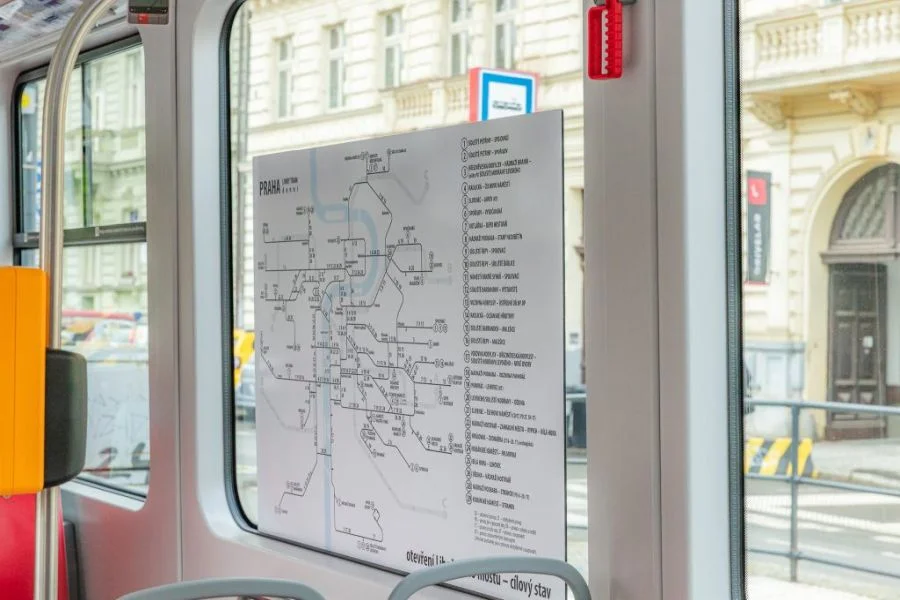
“Prague’s tram network is among the densest in the world, yet the city continues to grow and requires new connections. We are building where it makes sense – to link districts, speed up traffic, and offer people greater comfort in their daily lives. Expanding the tram network is not merely an investment in tracks, but above all in quality of life and the sustainable future of Prague,” explains Bohuslav Svoboda, Mayor of the Czech capital.
Overview of the six projects:
- Spring 2026: Dvorecký Bridge
By March 2026, the first major change in Prague’s transport network will become visible: the opening of the Dvorecký Bridge will create a new tram connection served by lines 20 and 21 as well as four bus routes. This will strengthen links between Budějovická and Smíchov and create new direct connections, for example, from Modřany to Malá Strana or Dejvice, and from Barrandov to Podolí or from Podolí to I. P. Pavlova.
- Spring 2027: Jarov (Olšanská – Habrová)
A year later, the new tram line between Olšanská and Habrová will open. It will form the backbone for the future development of the former Žižkov freight yard area. For residents of the Vackov and Třebešín districts, the new line 5 will significantly improve access to the city centre.
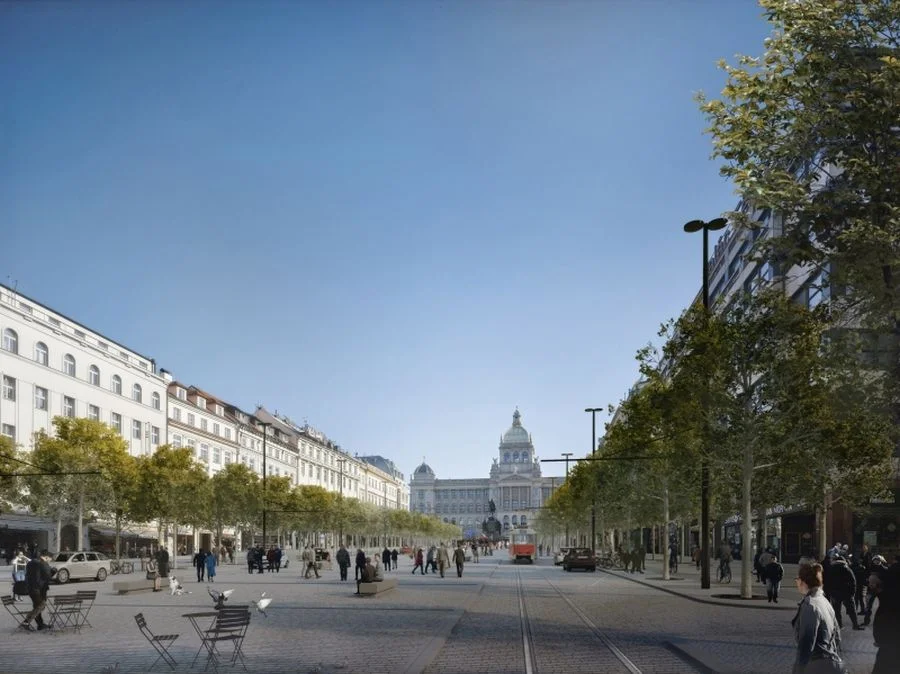
- Summer 2027: Wenceslas Square (Václavské náměstí and Muzeum)
In summer 2027, trams will return to the upper part of Wenceslas Square. Together with the new line around the National Museum, this will create a direct connection from Vršovice and Francouzská Street to the city centre – reaching Masaryk Railway Station and Dlouhá třída. This will improve access to Bělehradská Street as well as Vinohradská. Lines 6, 14, and 29 (later also 13) will operate here, providing flexible diversion options in case of disruptions, such as closures on Ječná Street.
- Late 2027: Strahov (Malovanka – Strahov)
A new direct link will be created on Strahov Hill between Strahov, the northern city centre, Hradčanská metro station, Letná, and Náměstí Republiky. The new lines 28 and 29 will directly connect the district to the city centre.
- Spring 2028: Malešice (Počernická)
After around 60 years of planning, the Malešice residential area will finally get its tram service. Lines 15 and 16 will provide a direct connection from the district to Náměstí Míru, Karlovo náměstí, and the main railway station. New stops along Počernická Street will also serve recently developed residential areas around Hagibor.
- Spring 2028: Nové Dvory (Libuš – Nové Dvory)
The extension of tram line 17 from Libuš to Nové Dvory is part of a broader plan to create a new local centre in this southern part of the city, with shops, services, and public infrastructure. In a few years, the new Metro Line D will also provide an important interchange point here.
With these six projects, Prague is sending a clear message: the city is determined to make its public transport system fit for the future – focusing on sustainability, efficiency, and quality of life for its residents.
More from Featured

Political Restart in the Czech Republic: New Government Adopts Policy Agenda