
New Czech Government Rejects EU Migration Pact
Rejection of the EU Migration Pact in its current form; new government intends to push for stricter measures
Foto: Vláda České republiky
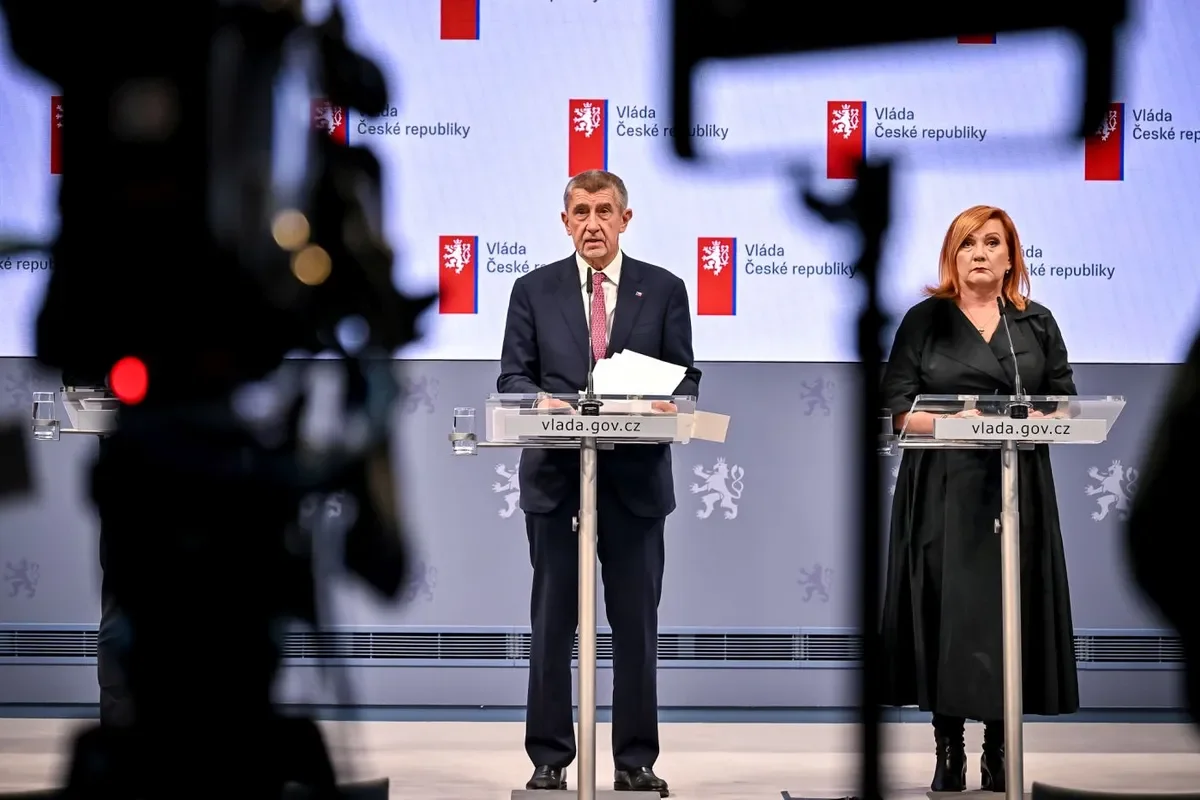
The new government rejected the EU Migration Pact in its first session. Prime Minister Andrej Babiš announced that, instead, the government would focus on stricter national regulations and adopt a hardline stance against illegal migration.
The government declined the EU Migration Pact in one of its first sessions, Prime Minister Andrej Babiš told journalists without providing further details. The rejection of the pact, along with the preparation of new migration and asylum regulations, forms part of his cabinet’s programme.
The EU Migration Pact, adopted last year, is set to come into effect on 12 June 2026. Its aim is to better manage migration, make controls more efficient, and expedite the return of rejected asylum seekers. From January onwards, stricter asylum and migration rules will come into force, implemented by the previous government under Petr Fiala (ODS) and aligned with the Migration Pact. According to the former coalition, these measures were intended to speed up international protection procedures and curb abuse.
In a resolution, the new government stated that it supports rejecting mandatory migration quotas under the pact and advocates a zero-tolerance policy towards illegal migration in both the Czech Republic and the EU. The goal is to maximise citizens’ security. The new government rejects the EU Migration and Asylum Pact in its current form and intends to actively pursue stricter measures.
According to Czech media, new Interior Minister Lubomír Metnar (ANO) is to present a draft for a new legal framework to combat migration. Together with Foreign Minister Macinka (SPD), he is also expected to reject Czech participation in the EU resettlement programme. Additionally, the country intends to join EU member states’ efforts to find practical solutions for illegal migration outside the EU, strengthen the protection of the EU’s external borders, and combat human trafficking.
Former Interior Minister Vít Rakušan (STAN) stated at Monday’s handover that rejecting the Migration Pact would mean the Czech Republic loses tools to fight illegal migration that remain available to other states. His successor Metnar sees the core of the conflict in the principle of solidarity. Only a week ago, EU states agreed to establish a solidarity fund for the coming year. The Czech Republic is exempt from contributions during this period, having received a large number of Ukrainian refugees under temporary protection.
In addition to the EU Migration Pact, the new government also rejected the ETS 2 regulation (EU Emissions Trading System 2). Furthermore, all payments for subsidised energy sources (POZE) have been transferred to the state, which is expected to reduce household energy costs next year. The ANO, SPD, and Motoristů cabinet also passed a new construction law and endorsed a proposal to freeze politicians’ salaries until the end of 2030.
More from Featured

Political Restart in the Czech Republic: New Government Adopts Policy Agenda