European Bison from Prague and Olomouc Strengthen Population in Azerbaijan
Prague Zoo has been keeping bison since 1948. Since then, over a hundred calves have been born there
Foto: Emil Khalilov | WWF
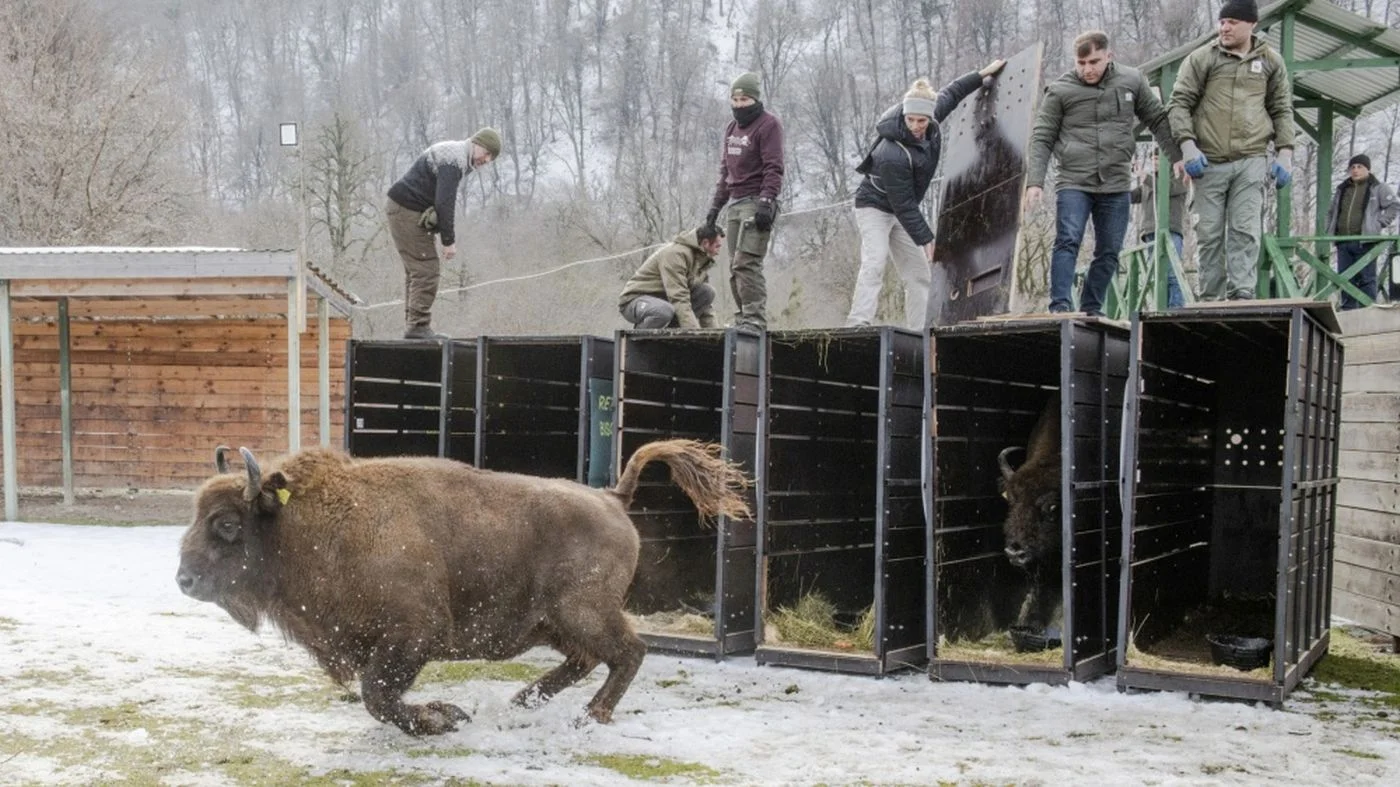
Five European bison from Prague and Olomouc have arrived in Azerbaijan to reinforce the reintroduced population there. The transport was part of an international project to protect bison in the Caucasus. In total, 18 animals travelled from European zoos to Shahdag National Park.
Five European bison from Prague and Olomouc Zoo have arrived at Shahdag National Park in Azerbaijan to strengthen the reintroduced wild population. What began as four females grew into a group of five during the waiting period for transport, which had been postponed due to the risk of foot-and-mouth disease: a cow in Prague gave birth to a calf.
The transport, organised last week by Berlin Zoo and the German branch of the World Wide Fund for Nature (WWF), was the largest of its kind to date. In total, 18 animals travelled to the foot of the Greater Caucasus: twelve bison from German, Austrian, Hungarian and Czech zoos, and six more from the Rothaar Mountains.
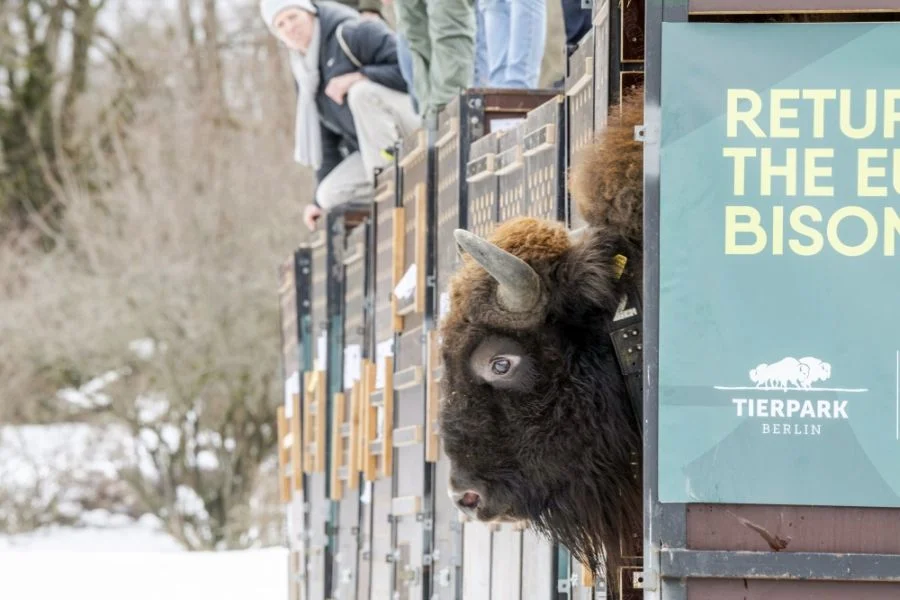
Foto: Emil Khalilov | WWF
“The cooperation of zoos is indispensable. Without it, we could not carry out such projects, let alone even consider them. I am pleased that the Czech Republic is part of this international initiative – with one animal from Bohemia and one from Moravia,” says Barbora Dobiášová, curator for hoofed animals at Prague Zoo. “In addition to the transport itself, we also help raise awareness of zoos as key institutions for conservation.”
The selection of the individual animals was carried out by the coordinator of the European Endangered Species Programme (EEP) for bison, based in Berlin. Age, health and genetic suitability of each animal were decisive. In 2024, the animals were first brought to Berlin to acclimatise before transport. From there, Berlin Zoo organised the flight on a Boeing 777F from Frankfurt to Baku, followed by the land journey to Shahdag National Park.
“Every step of such a transport operation – from selecting the animals, through medical examinations, to the actual execution – requires solid expertise in veterinary medicine, wildlife management and logistics,” explains Christian Kern, zoological director of Berlin Zoo. “We accompany the bison throughout the entire journey until they arrive safely in the national park.”
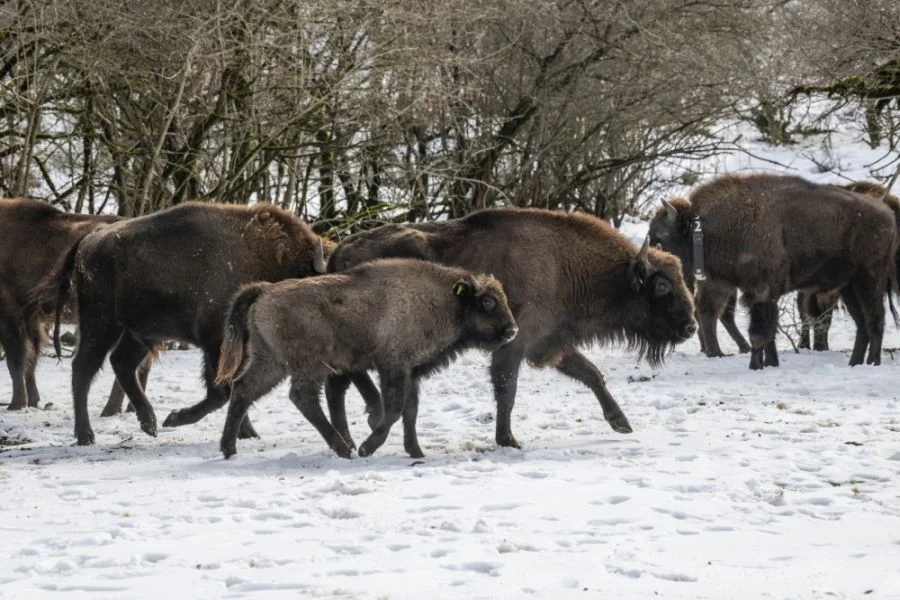
Foto: Emil Khalilov | WWF
The project “Return of the Bison to the Caucasus” began in 2019, under which 64 animals have so far been brought to Azerbaijan. They have successfully reproduced on site: last year alone, nine calves were born, meaning that around 90 bison now live in Shahdag. The goal of the project is to establish a self-sustaining population in their original habitat – the Caucasus was their last refuge a hundred years ago.
Bison survived in the wild only thanks to zoological institutions. After being exterminated in the first half of the 20th century, European experts founded the International Society for the Protection of the European Bison.
Prague Zoo has kept bison since 1948. Since then, over a hundred calves have been born there. In addition to Troja Zoo, visitors can also observe the animals in the enclosure in Dolní Počernice since October. In the past, Prague Zoo has provided bison for reintroduction projects – not only to strengthen the Caucasian population but also for Bieszczady National Park in Poland.
Tags
More from News