Laurin & Klement CCCC: Rare Four-Cylinder from Italy on Loan to the Škoda Museum in Mladá Boleslav
An exceptional exhibit expands the collection for 18 months – a globally unique motorcycle from the early days of engine development
Foto: Škoda Muzeum
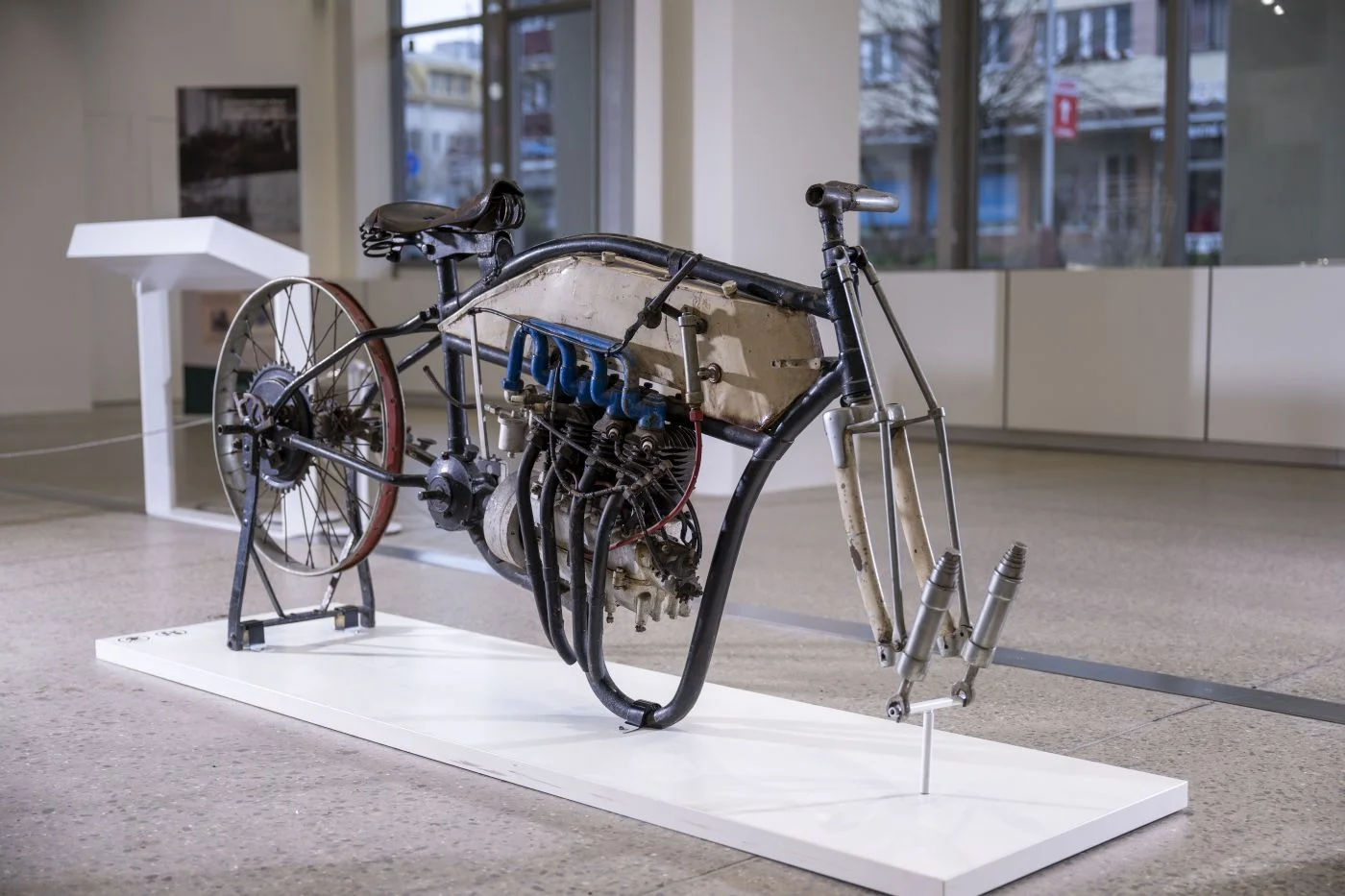
An extraordinary piece of engineering history is currently on display at the Škoda Museum: the world’s only surviving Laurin & Klement motorcycle type CCCC. The rare four-cylinder is considered a milestone in early motorcycle development and stands as a testament to the pioneering spirit of the engineers in Mladá Boleslav at the beginning of the 20th century.
The exhibition at the Škoda Museum in Mladá Boleslav has been expanded to include a special rarity: for a period of one and a half years, the only surviving Laurin & Klement motorcycle type CCCC is on display there. The historic vehicle has been loaned from the Museo Storico della Motorizzazione Militare to Mladá Boleslav – with the approval of the Italian Ministry of Culture.
The prototype, developed between 1903 and 1906, is among the earliest motorcycles in the world to feature an inline four-cylinder engine. Even at the time, the model was regarded as an expression of remarkable engineering skill and highlights the early expertise in engine development in Mladá Boleslav – an area that continues to play a central role at Škoda Auto to this day.
Technical pioneering spirit on two wheels
Motorcycle production at Laurin & Klement began as early as 1899. Only around five examples of the CCCC model were likely produced, across several stages of development. The use of an inline four-cylinder engine at the beginning of the 20th century was a technical rarity and illustrates the experimental approach of the designers.
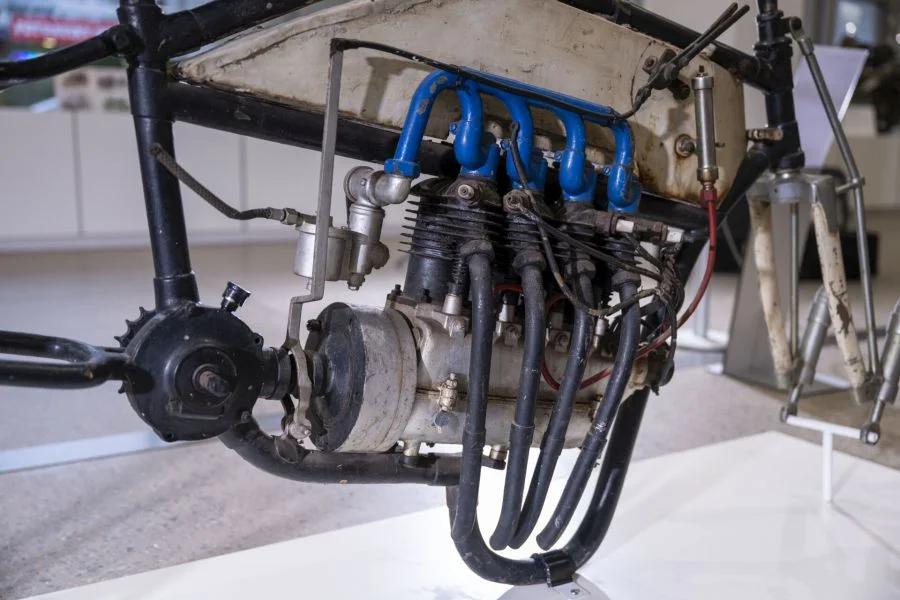
Foto: Škoda Muzeum
The first version consisted of four single cylinders arranged in sequence with a displacement of 471 cc. Later variants led to a more compact design with cylinders grouped in pairs.
The example now on display represents the most advanced stage of development: an air-cooled four-cylinder with 570 cc displacement, side-valve (SV) configuration and a triple-bearing crankshaft. With an output of 6 hp, the motorcycle reached a top speed of up to 75 km/h. Experts believe that this model was built only once in exactly this configuration.
Notably, only a few technical drawings of the vehicle exist – photographic documentation is completely absent. This further adds to the significance of the exhibit.
The loan was only secured after years of negotiations. In addition to experts from both museums, representatives of the National Technical Museum (Národní technické muzeum) as well as diplomatic actors from both countries were involved. The project also received support from Petr Pavel.
The motorcycle will remain on display in its original condition in the museum’s main exhibition until September 2027.
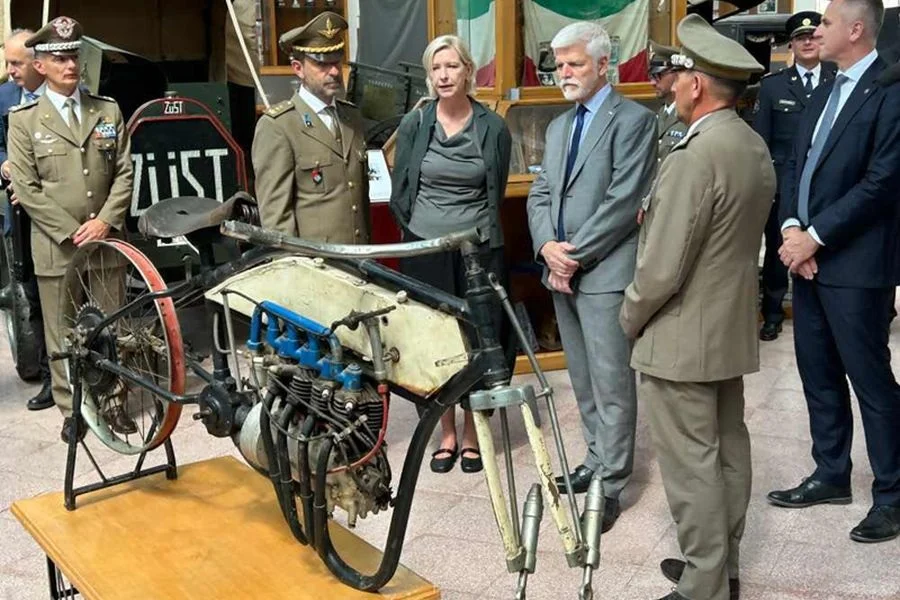
Foto: Škoda Muzeum
Engine expertise with over 125 years of tradition
The roots of engine development in Mladá Boleslav date back to 1899, when the first in-house power unit was created with the Slavia Type A. Since then, Škoda Auto has developed into an important development centre within the Volkswagen Group.
Today, the company is responsible, among other things, for the development of the EA 211 engine series as well as numerous transmission variants for the Group. Modern testing facilities enable output testing of up to 400 kW.
The presence of the Laurin & Klement CCCC model in the museum thus creates a link between the beginnings of engine development and the present day – and highlights how deeply rooted the technical tradition at the site truly is.
Škoda Museum | Mladá Boleslav
Website | Facebook | Instagram
More from Culture & Entertainment

Godfathers of Rave: The Prodigy Return to Prague With New Live Show

Easter Monday in the Czech Republic: Between Tradition and Change