

Former Telephone Exchange in Prague 3 to Be Converted into Premium Residential Project
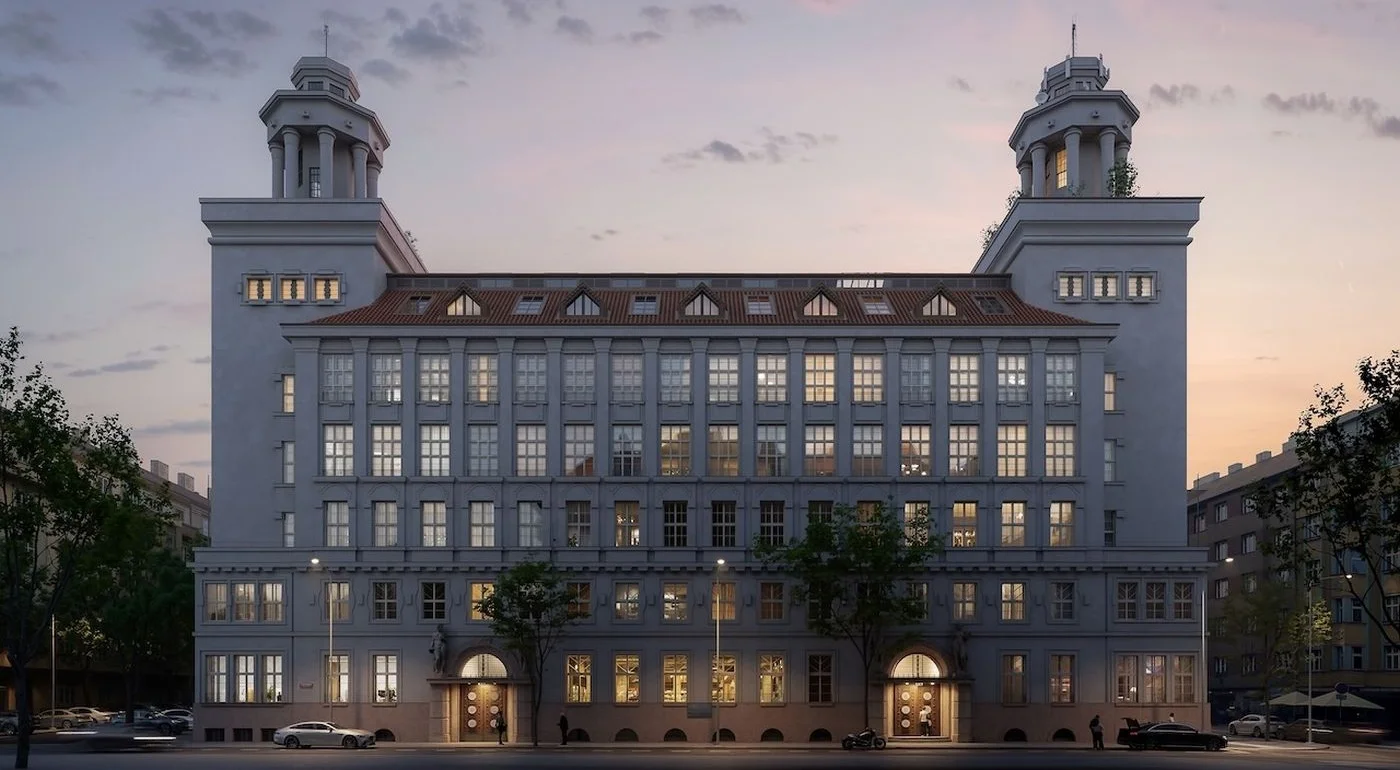
The building, constructed in 1926 according to plans by architect Bohumír Kozák, formed part of Prague’s technical infrastructure for decades
Visualisation: PSN
A building that once connected Prague with the world is set to take on a new function: the former telephone exchange on Fibichova Street is to be transformed into a modern residential project with services and a publicly accessible ground floor. Construction is scheduled to begin in this summer.
The former interurban telephone exchange on Fibichova Street in Prague 3 is facing a comprehensive transformation. The historic building, which once played a central role in the city’s communications infrastructure, is to be repurposed as a premium rental residential complex with additional services and a publicly accessible ground floor. The project is being developed in cooperation with the architectural studio Jakub Cigler Architekti.
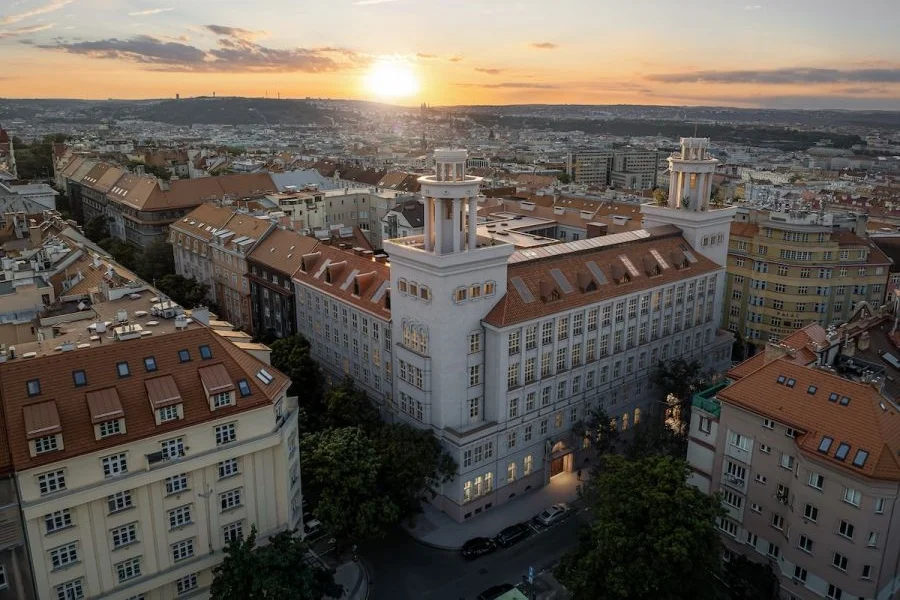
The building, constructed in 1926 according to plans by architect Bohumír Kozák, formed part of Prague’s technical infrastructure for decades. In recent years, however, it has largely been cut off from urban life. One of the project’s main objectives is therefore to reopen the building and integrate it more closely into the surrounding neighbourhood.
Source: Visualisation: PSN
The architectural design focuses on preserving the original structure. Characteristic elements, the monumental appearance, and the generous interior spaces will be retained and complemented by contemporary residential functions. A total of 116 residential units of varying sizes are planned.
In addition to structural quality, the usage concept also plays a key role. Plans include a reception area with concierge service as well as shared facilities such as a wellness and fitness area. A rooftop terrace with a sauna and views over Prague is intended to provide added value for residents.
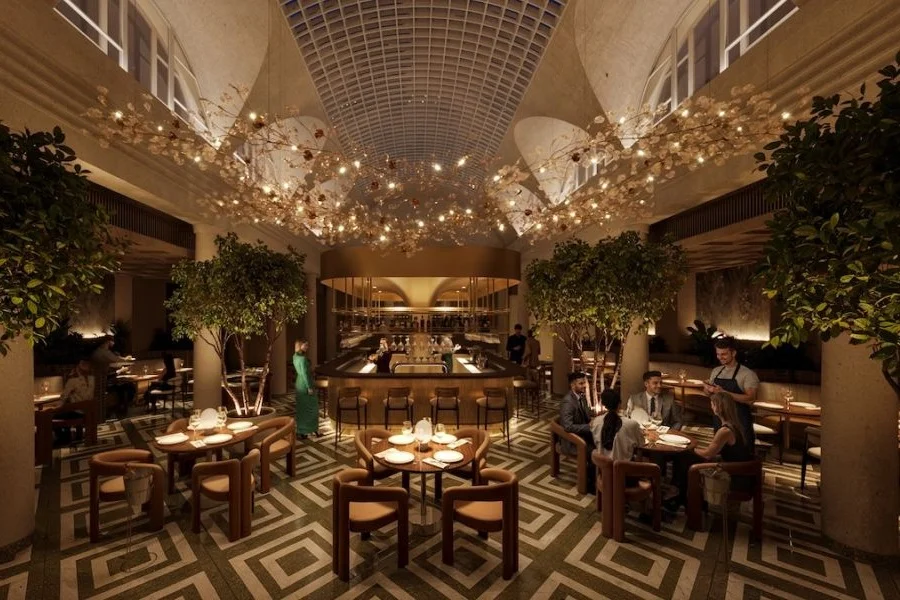
Source: Visualisation: PSN
The ground floor will also be redesigned and more closely integrated into the urban space. Commercial premises are planned, particularly for gastronomy and café concepts, which are expected to contribute to the revitalisation of the area.
Construction is scheduled to begin in summer 2026, with completion targeted for autumn 2028. With the conversion, the building will take on a new role within the urban fabric—as a place to live, a meeting space, and part of everyday city life.
More from Real Estate
Mortgages in the Czech Republic Become More Expensive: Interest Rates Rise to 5.79%