


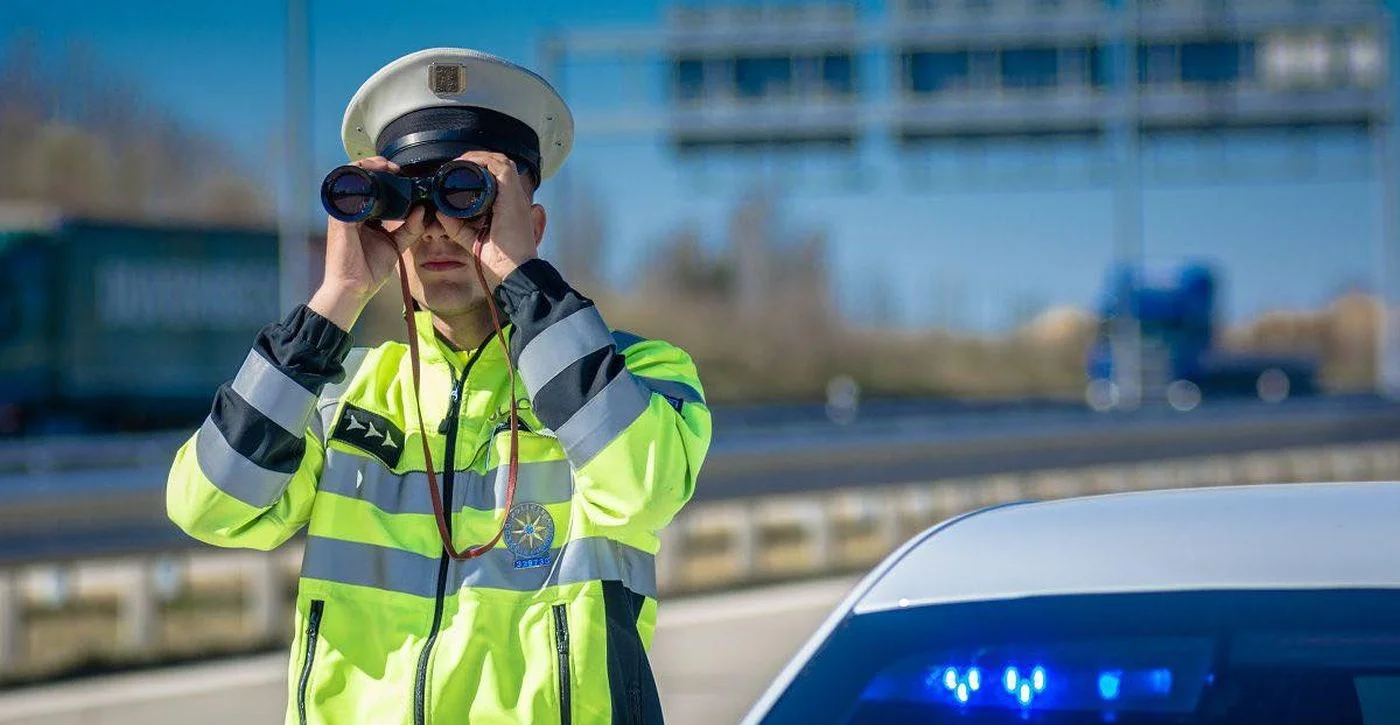
Speed Marathon 2026: More Than 3,000 Offences Detected in Nationwide Checks
More speeding offences, growing public interest and targeted checks at more than 1,100 locations
Foto: Policie České republiky
Hundreds of police officers checked thousands of vehicles during this year’s Speed Marathon in the Czech Republic. The results once again show that speeding remains a key problem on the roads.
On Wednesday, 15 April, the Czech Republic took part in the Europe-wide road safety campaign Speed Marathon, organised under the umbrella of ROADPOL. During the 24-hour operation, police officers checked around 6,414 vehicles across the country.
The checkpoints had been carefully selected in advance. A total of 1,173 locations were identified based on traffic data, accident frequency, traffic volume and tips from the public. The latter again played a central role this year: more than 16,000 reports and over 167,000 votes were submitted, a significant increase compared to the previous year.
During the operation, officers detected a total of 3,188 traffic offences. In 1,910 cases, these involved speeding. Despite prior announcements of the checks and the publication of enforcement locations, the results once again show that many road users underestimate the risks of excessive speed.
Video: Speed Marathon 2026 | Policie ČR
Several particularly serious cases highlight the scale of the violations. In Brno, a driver was recorded at 125 km/h in a 50 km/h zone. In Bílina, police measured 115 km/h where 50 km/h is permitted. In Prague (Rohanské nábřeží), a driver was travelling at 100 km/h and was also under the influence of drugs.
In addition to speeding, police recorded numerous other offences. These included 230 cases involving technical defects in vehicles, 203 driving behaviour offences and 173 cases of using a mobile phone while driving. There were also 130 offences related to motorway tolls, 69 cases of dangerous overtaking and 60 seatbelt violations.
Officers also recorded nine cases of drink driving, ten cases involving other drugs and eleven drivers without a valid licence.
Compared to the previous year, the picture is mixed: while the number of speeding offences and the total number of offences have increased slightly, the number of drink-driving offences has fallen. At the same time, the number of drug-related driving cases has risen.
The evaluation of the operation is not yet complete. However, the police have already announced that they will use the findings to continue focusing checks on particularly dangerous road sections in order to further improve road safety.