

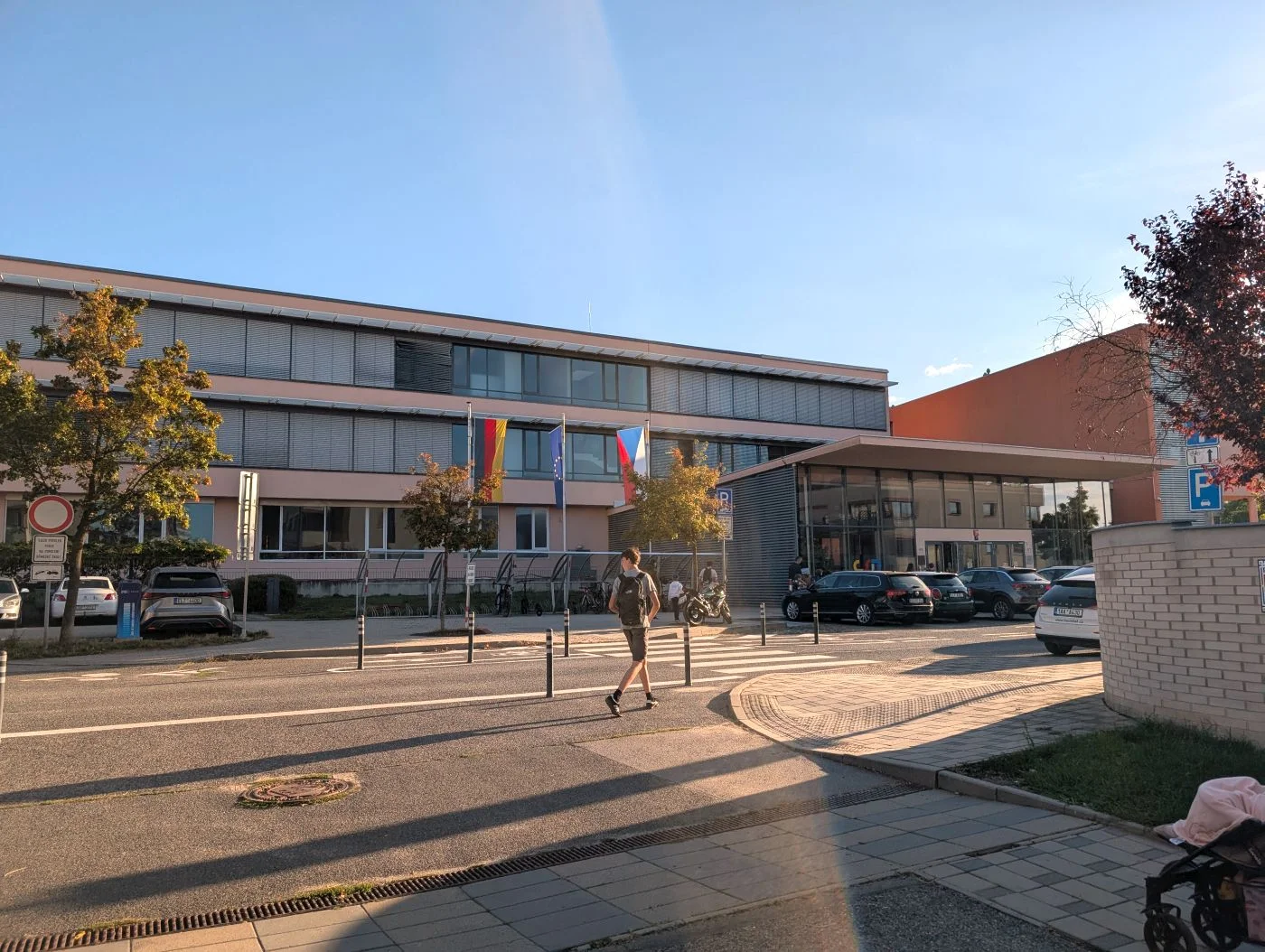
Belinda Weller, the new Head of Primary School at the Deutsche Schule in Prague
An interview on starting out in a new city, multilingualism and the special role of the school in Prague
Photo: Deutsche Schule Prag
Belinda Weller has been the new head of the primary school at the Deutsche Schule in Prague since September. In an interview with Prague Daily News, she talks about her first impressions, the special role of the school of international encounters and the opportunities offered by everyday life at an international school.
Belinda Weller (57) has been Head of Primary School at the German School Prague (Deutsche Schule Prag, DSP) since 1 September. She was born in France, grew up in Germany and has family roots in the former Yugoslavia. Most recently, she worked as Head of Primary School at the German School in Belgrade. In the interview, she explains why she has now chosen Prague.
Why did you choose Prague?
It was a completely spontaneous decision. I saw the job advertisement in a newsletter and applied. I already knew Prague from the years of political change. Even back then, I was interested in the shared culture and history and in the independent, forward-looking development. The Czech Republic is at the heart of Europe, and that remains interesting. And then everything else fitted as well: a beautiful city with a high quality of life.
What distinguishes the DSP primary school from other international schools?
It starts with the fact that the DSP primary school is both an official German School abroad and an accredited Czech primary school. I have already had the chance to gain some insight into bilingual schools, but the concept of a school of international encounters is something special and naturally appealed to me.
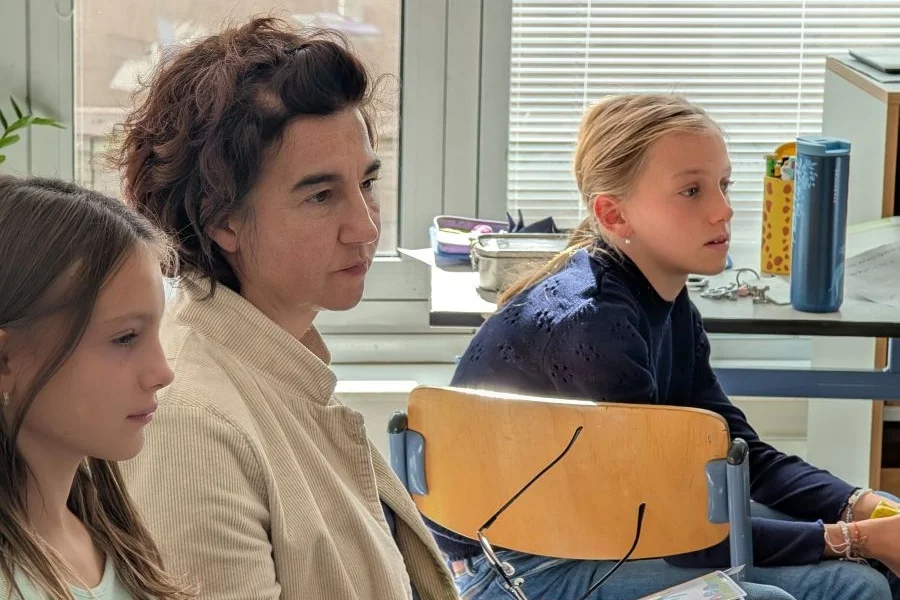
Photo: Head of Primary School Belinda Weller | Deutsche Schule Prag
You already gained experience at a German school abroad in Belgrade. Are these schools structured in the same way everywhere?
There are many similarities. These schools are organised as islands abroad, as teaching there is mainly based on the German school system. Another thing they have in common is that many interested and innovative people want to work there. They make a conscious decision to work at this type of school and in the German school system abroad. What distinguishes them are the culture-specific aspects of the individual countries and places in which the schools are located. But such differences also exist within Germany itself, for example between northern and southern Germany.
There are currently pupils from 24 nations at the DSP. Is that a challenge for primary school work?
It is a challenge, but also an enrichment. At schools with only one or two languages and ethnic groups, conflicts can occur more often than at schools that are already multicultural and international by nature. Openness towards others is reflected in the attitude of the parents and, of course, also among colleagues.
At the beginning of November, after one year of construction, the DSP will open the new building for its German-Czech kindergarten and primary school. What can pupils, parents and teachers expect?
As I have now visited the construction site twice in its final stage, I have already been able to get a very good impression. I was initially very positively surprised by the highly modern concept. Teaching is taking completely new approaches here, with space being viewed as an active part of the educational environment. Interaction between the children is made possible without requiring major changes or organisation. From the outset, there are many places where pupils can learn in ways other than purely through frontal teaching. I also see the many possibilities offered by this new building as an additional enrichment. It is also located on the same campus as the other sections of the school. The proximity to the kindergarten and secondary school offers many positive aspects.
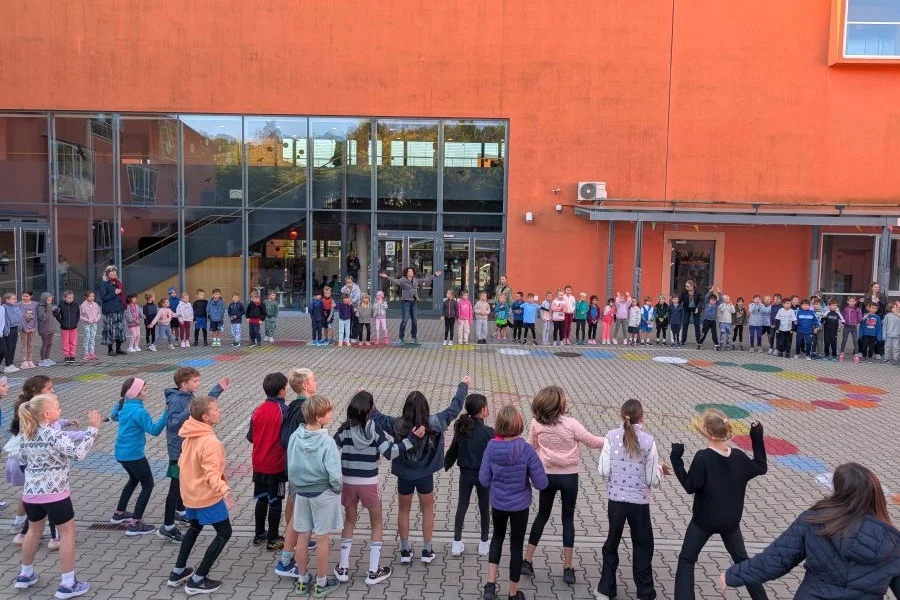
Photo: Deutsche Schule Prag
Multilingualism is an important cornerstone of the DSP. How is this reflected in primary school work?
It begins in the administration, where we speak to each other in three languages, depending on who we are dealing with. Multilingualism is a completely natural part of daily communication with parents, colleagues and pupils, to varying degrees.
Can children who have no knowledge of German at all also enrol?
Yes, they can. We are a school of international encounters that is also accredited in the Czech Republic. In kindergarten and the first year, we also accept children who come to us without any knowledge of German. At that age, they learn it very quickly.
How involved are parents in everyday school life at the DSP?
Perhaps a little more than at other schools, as we invite parents to take part in many projects. We are pleased that this is so well received and that parents help shape the future of the school, for example through the campus parliament and the parents’ council.
What does the DSP offer its pupils in the afternoon?
Our all-day programme starts in the afternoon. Pupils can then take part in optional study time or homework sessions and in various extracurricular activities. These range from sport and music-related activities to arts and crafts. The programme changes every year according to needs and wishes.
How does cooperation with the kindergarten and the secondary school work?
At the DSP, we have the great advantage of sharing one campus. This means that we teachers are close to one another and can communicate quickly. In addition, there are of course established committees in which projects are developed on a subject-specific or interdisciplinary basis. This naturally also involves our pupils. For example, the pre-school group regularly visits the primary school, and pupils in the fourth year of primary school meet pupils in the fifth year of the Gymnasium to gain their first impressions and make the transition to the next section of the school easier. During school celebrations, the entire campus even comes together.
Deutsche Schule in Prague since 1990
The Deutsche Schule in Prague was founded in 1990. It is a recognised German school abroad supported by both the Federal Republic of Germany and the Ministry of Education, Youth and Sports of the Czech Republic. All sections of the school – kindergarten, primary school and Gymnasium – are also accredited in the Czech Republic.
Further information about the Deutsche Schule in Prague can be found at www.dsp-praha.org.
Deutsche Schule Prag
Schwarzenberská 700/1, Prag 5
Website | Facebook | Instagram
More from Politics & Education

Havel90: Czech Republic celebrates the legacy of Václav Havel

Czech Republic Prepares for the 2026 Municipal and Senate Elections