

After Nearly 20 Years: Iconic ‘Žabák’ Sculpture Returns to Ďáblice in Prague 8
A modern recreational area featuring a fountain, seating and new green spaces has been created around the popular bronze sculpture
Photo: Praha 8
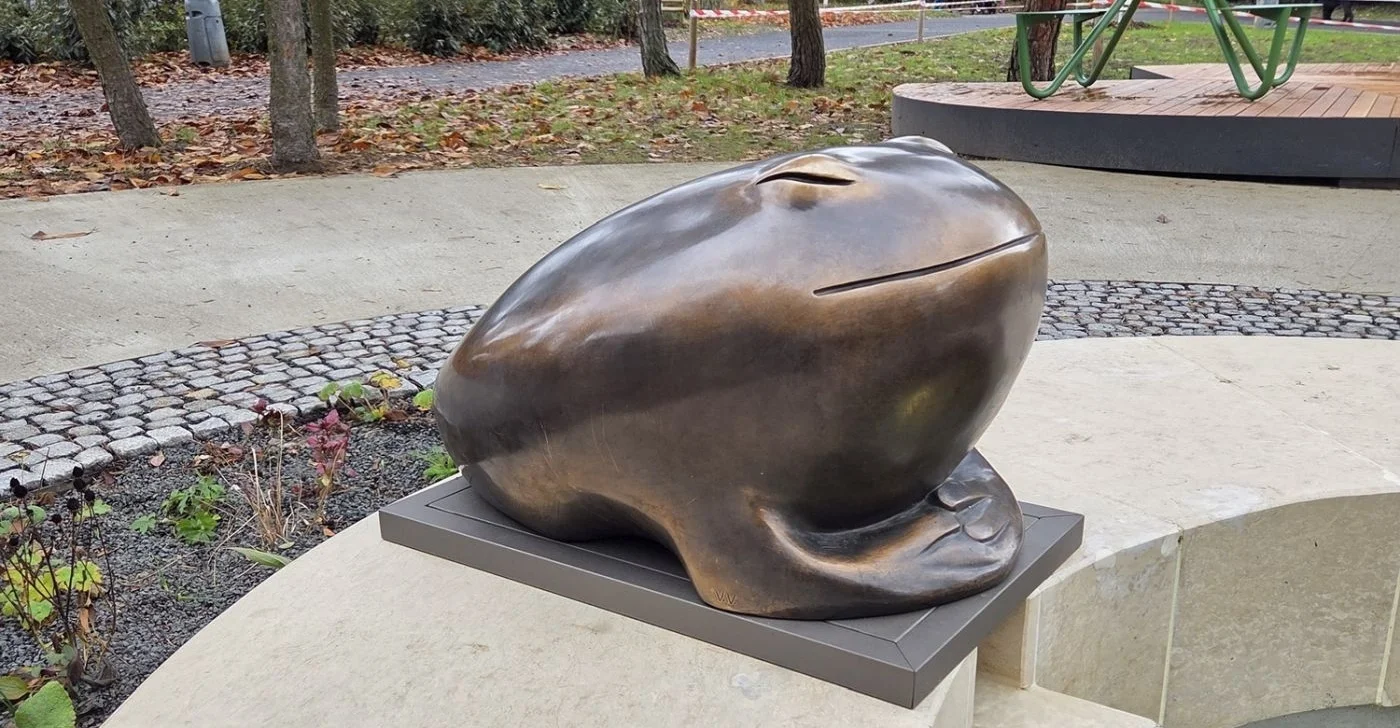
A piece of Prague’s local history has returned: after nearly two decades, the Ďáblice housing estate has regained one of its best-known landmarks. The return of the popular frog sculpture is also accompanied by a comprehensive upgrade of the surrounding public space.
A newly redesigned recreational and relaxation area has officially opened on Prague’s Ďáblice housing estate, in the immediate vicinity of the Ládví outdoor swimming pool. At the heart of the area are a fully restored fountain and the bronze sculpture ‘Žabák’ (Frog), which has returned to its original location after nearly 20 years.
“I am absolutely delighted that Žabák is finally back home and that the entire area around it has come back to life. For local residents, it holds a special place in their hearts, with generations of people remembering it,” explains Tomáš Hřebík, Mayor of Prague’s eighth district. He hopes that people will once again naturally arrange to meet at Žabák, much as they do at the St Wenceslas Monument in Prague’s city centre.
The history of the bronze sculpture dates back to the 1970s. At the time, it was installed on the housing estate alongside a water basin and fountain and quickly became a popular meeting place for local residents.
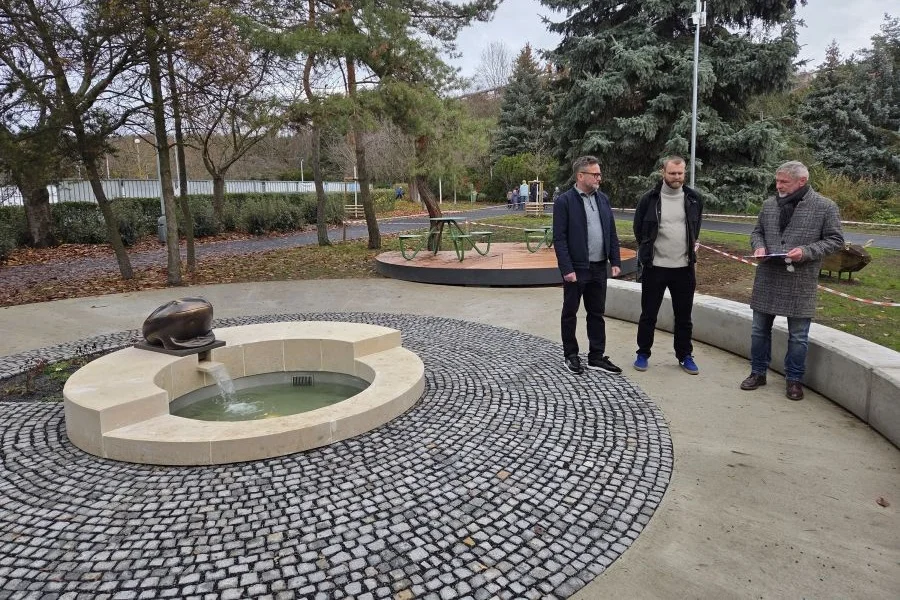
Photo: Praha 8
In the past, however, the sculpture was repeatedly targeted by metal thieves. It was first stolen in 2007 but was discovered shortly afterwards by grounds maintenance workers in nearby bushes. Following its restoration, it returned to its original location before being stolen again in 2008. The original artwork has remained missing ever since.
The sculpture was created by the renowned Czech sculptor Vincenc Vingler (1911–1981), who devoted himself almost exclusively to depicting animals from the mid-1940s onwards. His best-known works also include sculptures of a Przewalski’s horse, a male goat and a pelican at Prague Zoo.
The return of Žabák was made possible through an initiative by the Prague 8 district in close cooperation with the artist’s family. At the request of the family and experts, the sculpture was recast in bronze. As the casting was based directly on the surviving original model owned by the family, it is considered not merely a replica but a new original casting from an art-historical perspective.
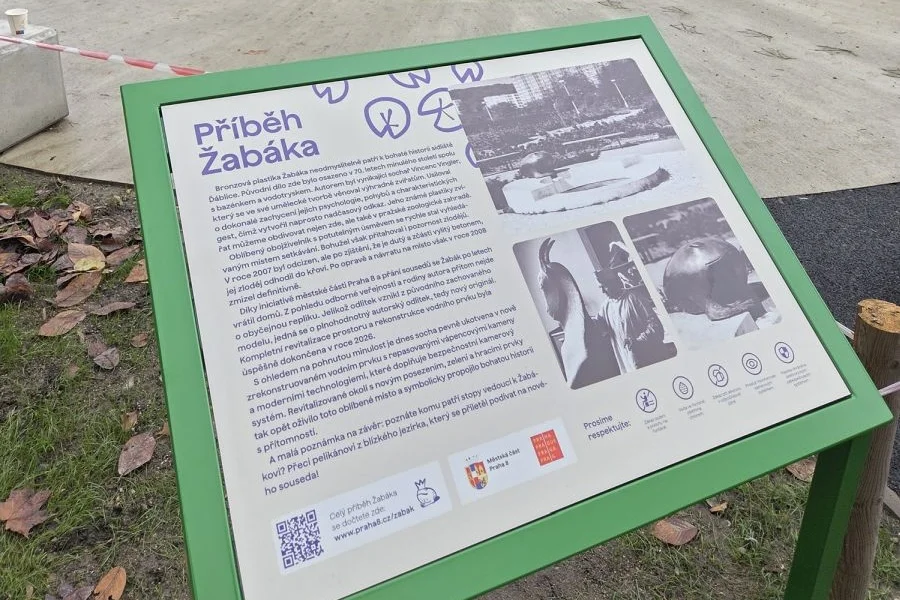
Photo: Praha 8
Modern Recreational Area with Historical Elements
As part of the redesign, the original fountain was also completely renovated and equipped with modern technology. The historical limestone elements were professionally restored and incorporated into the new design.
Extensive landscaping transformed the surrounding area into an attractive recreational space. In addition to various seating options and a wooden platform, new play facilities for children and green spaces featuring perennial flower beds were created.
A playful detail can be found in the concrete surrounding the water basin: the footprints of a pelican have been immortalised there, symbolically representing a visit from the nearby pond on the housing estate.
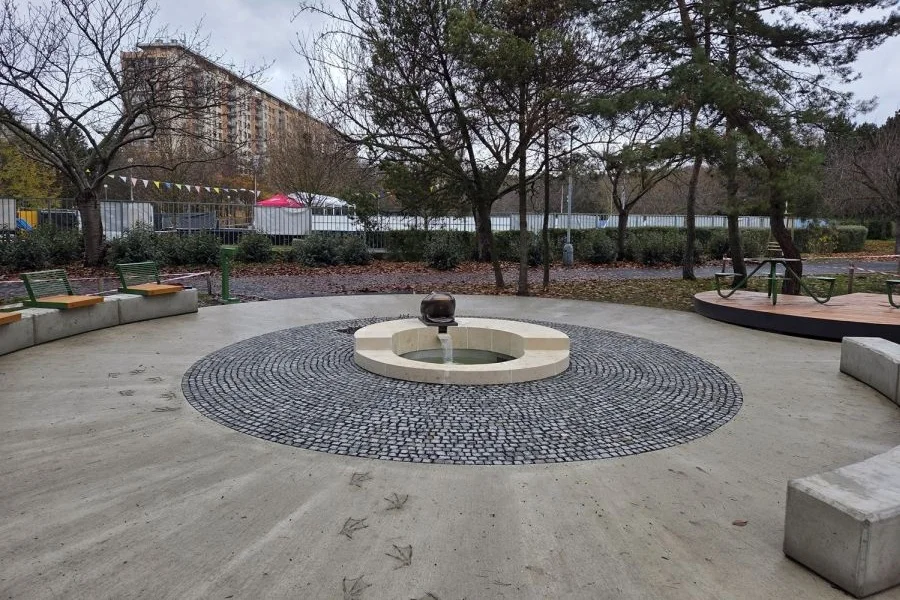
Photo: Praha 8
To prevent another theft, the bronze sculpture has been firmly secured to its stone base and equipped with an integrated security system. In addition, the entire area is monitored by CCTV around the clock.
“I very much hope that Žabák will now remain with us in Ládví forever. In the future, I would like us to devote even more attention to the development of public spaces throughout Prague 8 – whether through the maintenance of green spaces, the restoration of artworks or the creation of further places for people to meet and relax,” Hřebík concludes.
The Prague Daily News editorial team is responsible for this article. Spotted an error? Email us to info@praguedaily.news. Editorial standards
More from News