


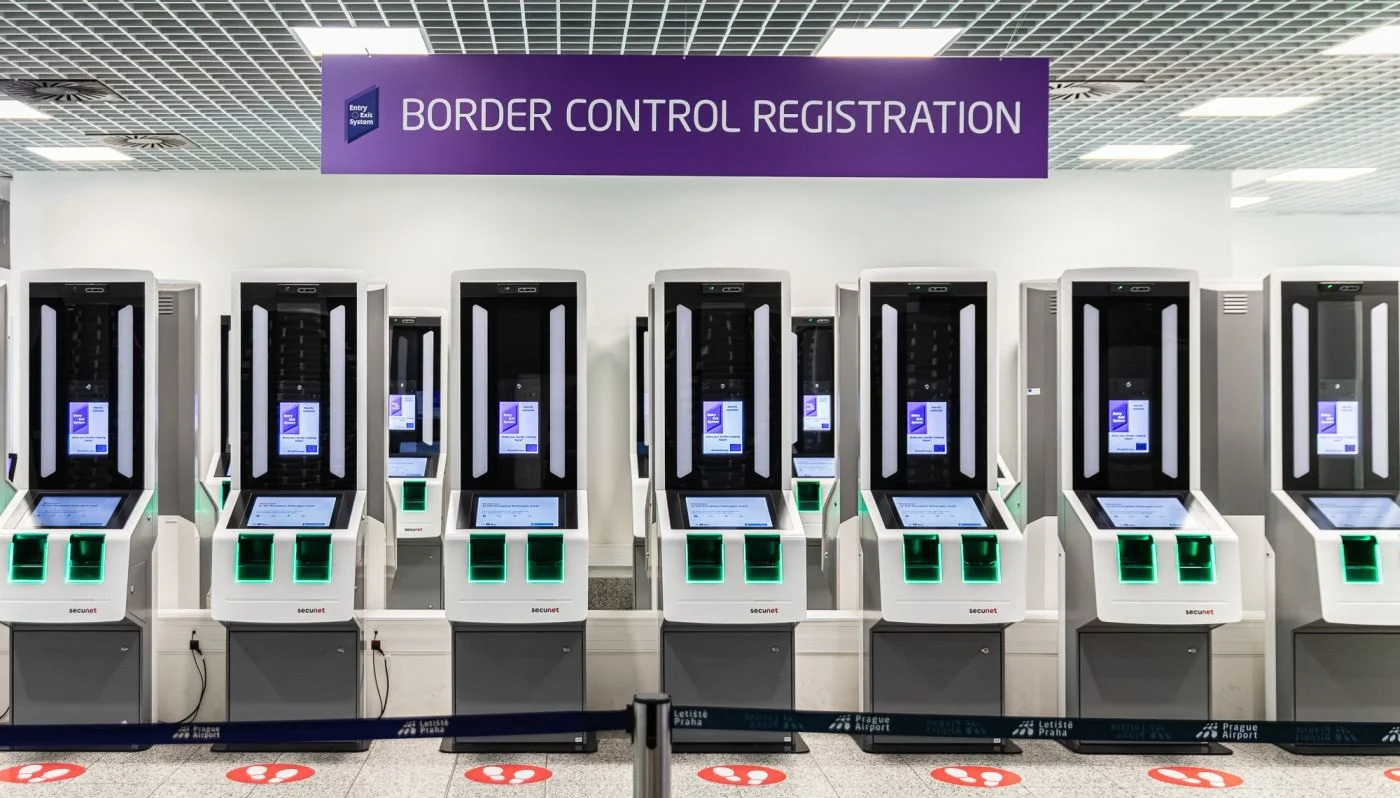
Prague Airport aims to reduce waiting times at passport control for arrivals from non-Schengen countries
New package of measures aims to improve procedures at passport control and reduce queues, particularly at peak times
Photo: Prague Airport
Long queues for passengers arriving from non-Schengen countries should become less frequent at Prague Airport in future. To achieve this, the airport is introducing additional on-site support, better information and more targeted management of passenger flows.
Prague Airport is responding to longer waiting times for passengers arriving from non-Schengen countries. Together with the Czech police and the Ministry of the Interior, the airport is implementing a package of measures aimed at improving European Entry/Exit System (EES) procedures at passport control and reducing queues, particularly at peak times.
The measures are based on an action plan approved by the airport’s Board of Directors in mid-September. According to the airport, the main focus is on better passenger care and closer operational coordination directly in the passport control area.
“We do not want passengers to spend even one minute longer at passport control than is absolutely necessary,” said Prague Airport Chairman Radomír Lašák. One key factor, he said, was gaining a better understanding of why passengers make mistakes at the self-service kiosks or fail to complete their registration.
Photo: EES | European Union
The airport therefore plans, among other measures, to expand the information available to passengers and provide it in more languages. The aim is not only to provide short-term relief, but also to create a more stable system in the long term.
Additional staff and better management of passenger flows
According to the airport, some of the measures have already been implemented in recent weeks and months. Since the introduction of the European Entry/Exit System (EES), so-called Red Teams have been deployed in the control area. Staff are intended to coordinate passenger flows and provide particular support to senior citizens, families with children and people with reduced mobility.
In addition, the airport is analysing the busiest arrival times for flights from non-Schengen countries. Using these analyses, peak periods are to be forecast up to 30 days in advance so that staffing levels and capacity can be adjusted in good time. The measures are being coordinated with the Czech Foreign Police and the Ministry of the Interior. According to the airport, additional control points and a further increase in processing capacity are also being prepared.
Multilingual information and water for passengers waiting in queues
Further measures are expected to follow in the short term. Information screens in the terminal are to display expanded guidance in several languages. New information in Hebrew and Chinese is among the measures planned.
Passengers who have to spend longer periods waiting in queues are also to be provided with bottled water. The airport describes this as part of an expanded passenger care service.

Photo: EES | European Union
At the same time, specially trained staff are to question passengers directly at the EES self-service kiosks when their registration has not been completed successfully. The findings will then be used to improve the operation of the systems. According to the airport, the current success rate for registrations is around 60 per cent. The aim is to increase this proportion to as much as 80 per cent.
Improved floor markings and wayfinding in the terminal are also planned. Together with the airlines, the airport is also preparing information that will inform passengers about entry procedures before they arrive in Prague.
More from Business

D3: Excavation Begins on Exploratory Tunnel for Prostřední Vrch Tunnel
Emirates Brings Airbus A380 Back to Prague