


Winter Is Coming: What Drivers in the Czech Republic Should Bear in Mind
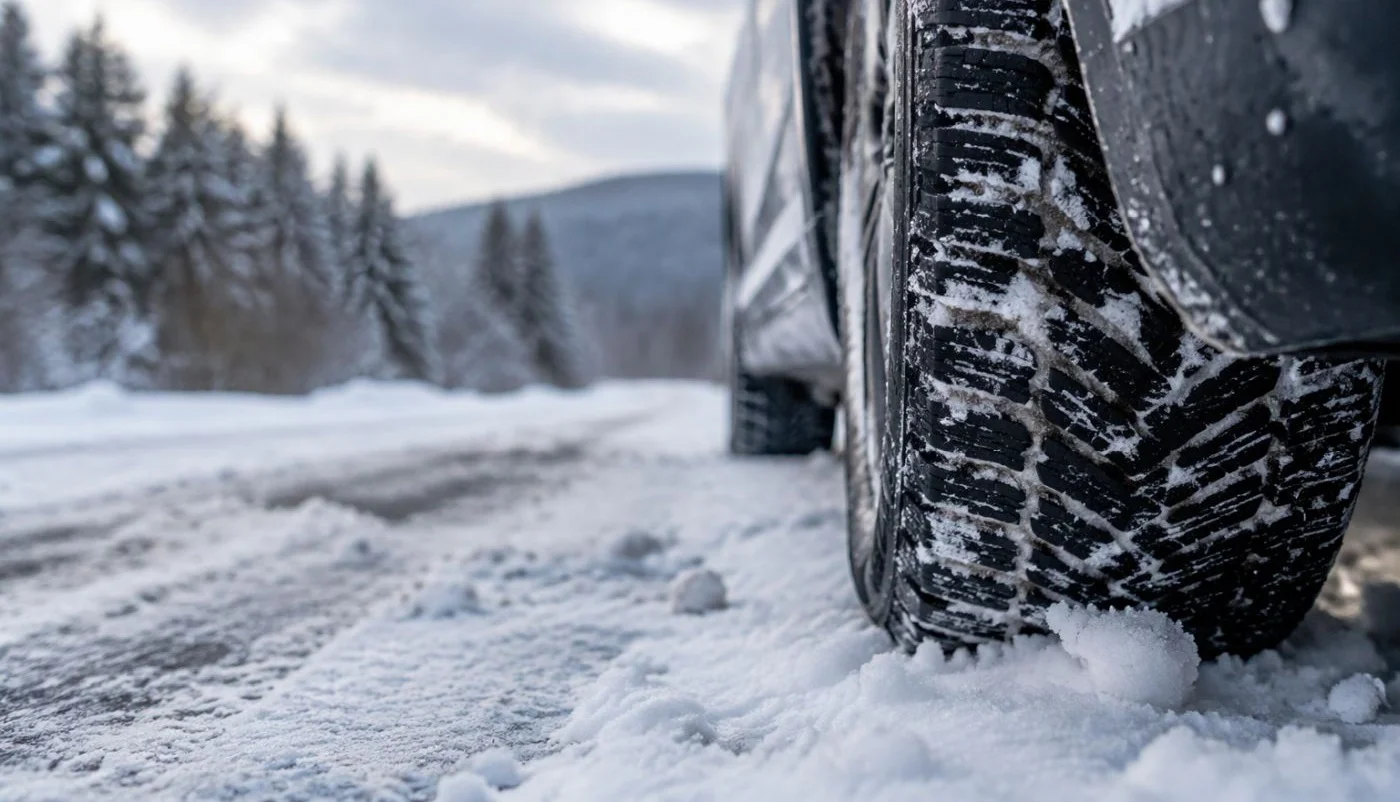
Winter tyres are compulsory in the Czech Republic when roads are covered by a continuous layer of snow or are slippery with ice or frost
Photo: Ministerstvo dopravy ČR
Since 1 November, winter tyres have been compulsory in the Czech Republic in wintry road conditions. Overnight temperatures are expected to fall below freezing across much of the country in the coming days.
Falling temperatures increase the risk of slippery roads. Drivers still using summer tyres should therefore avoid putting off the change any longer. The Czech Ministry of Transport and the road safety initiative BESIP are reminding drivers of the current rules and recommending that they also check their vehicle’s condition before winter.
In the Czech Republic, winter tyres are compulsory from 1 November to 31 March when roads are covered by a continuous layer of snow or are slippery with ice or frost. The requirement also applies when weather conditions mean such road conditions can be expected during the journey.
For motor vehicles used to transport passengers or goods with a maximum authorised mass of up to 3.5 tonnes, winter tyres are required on all wheels under these conditions. The minimum tread depth is four millimetres. Vehicles over 3.5 tonnes must have winter tyres with a minimum tread depth of six millimetres on all wheels of permanently driven axles.
Check Tread Depth and Tyre Condition
When changing tyres, drivers should check their tread depth, condition and pressure. Tyre age also plays a role. The last four digits of the DOT marking on the tyre sidewall indicate the week and year of manufacture. For example, 2423 means the tyre was manufactured in the 24th week of 2023.
Alongside age, previous use, storage, wear and any damage also play a role in assessing tyre condition.
Tread wear indicators in the grooves provide an initial indication of how worn a tyre is. Their position is usually marked on the sidewall with TWI. Some winter tyres also have an additional winter tread wear indicator marked WTWI.
Comparative figures cited by BESIP show how much tyres can affect braking distances. On snow, the braking distance at 50 km/h was eight metres shorter with winter tyres than with summer tyres. On ice, the difference at 30 km/h was eleven metres.
All-Season Tyres as an Alternative
More and more drivers are choosing all-season tyres. They can be an alternative for those who drive relatively little and mainly travel in cities or regions with milder winters.
The choice of tyres depends on where, how often and under what conditions the vehicle is used. Good tyre quality, sufficient tread depth and good tyre condition are important for every type of tyre.
Preparing Your Vehicle for Winter
Before setting off, snow and ice must be removed from the windows to ensure a clear view ahead, behind and to both sides. The windscreen wipers and lights should also be checked. In winter in particular, spray and road dirt can quickly make lights dirty.
Preparing for winter also includes checking the battery and vehicle fluids, and topping up with sufficiently frost-resistant screenwash.
More from News