

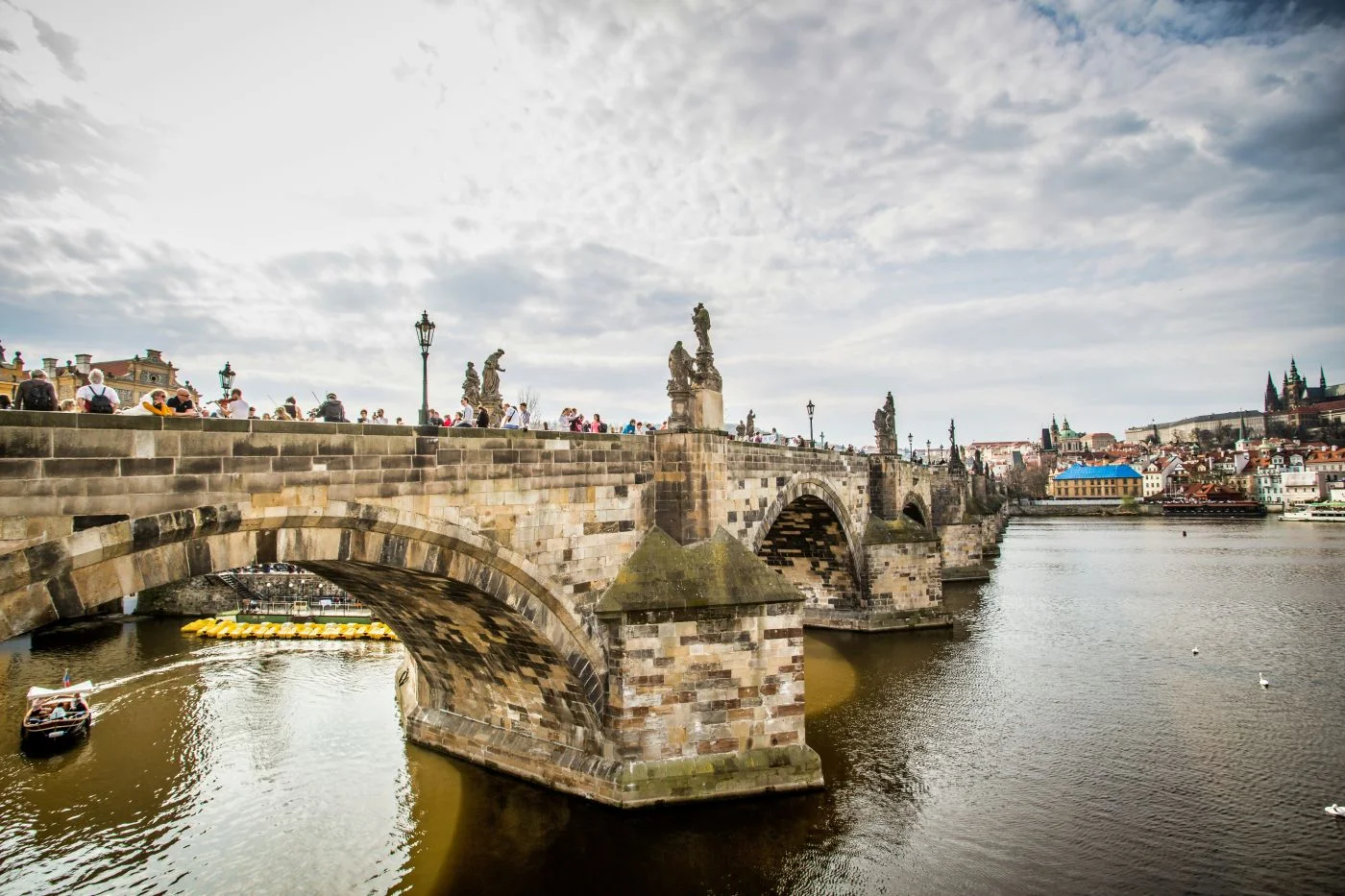
Charles Bridge Gets Major Clean as Algae and Plant Growth Are Removed
Specialists will work for several weeks using climbing equipment and from boats – pedestrian access remains unaffected
Foto: Sergey Mind | Unsplash
Using ropes, boats and a great deal of care, the cleaning of one of Prague’s best-known landmarks is getting under way. Algae, plant growth and shrubs will be carefully removed from Charles Bridge over the coming weeks, with no disruption for visitors.
Charles Bridge will undergo a thorough cleaning over the coming weeks. Specialists will remove algae, plant growth and wild vegetation from the historic façade and bridge piers. Some of the work will be carried out using ropes and from boats, but pedestrian access will not be affected.
Routine maintenance of the bridge’s exterior surfaces and piers began on Monday morning. Prague’s Technical Road Administration (TSK) will clean the historic masonry of algae, biological deposits and so-called airborne vegetation over the coming weeks.
Due to the difficult-to-reach areas, professional rope access techniques will also be used. Workers will be suspended on ropes along the outside of the bridge, while the lower sections of the piers will be treated from a boat on the Vltava River.
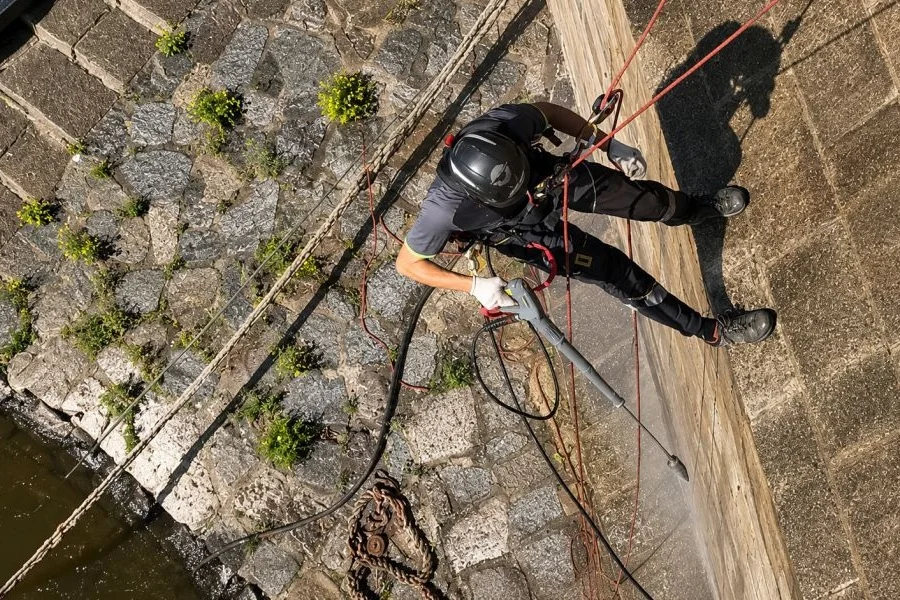
Foto: TSK Praha
According to the city, all work will be carried out without affecting pedestrians or activities around the bridge. The ongoing peak tourist season is also expected to remain unaffected.
“Charles Bridge is close to our hearts and a significant symbol of our city that has endured for centuries. Its maintenance requires absolute precision,” said Prague’s First Deputy Mayor, Jaromír Beránek.
Regular removal of algae and plant growth helps protect the unique stone masonry from unnecessary damage. Thanks to the expertise of restorers and industrial rope access specialists, the work can be carried out with great care and without disrupting visitors, Beránek added.
The historic masonry is being cleaned largely by hand. Algae and biological deposits are removed using water under controlled pressure, nylon brushes and wooden scrapers. A chlorine-free treatment is also being used.
In places where plants or shrubs are growing between the stone blocks, the joints are opened to a depth of two to three centimetres. Restorers then remove the roots before resealing the affected areas with traditional lime mortar.
All methods and materials used are subject to strict supervision and are continuously coordinated with the relevant heritage conservation authorities. As the work is being carried out only on isolated sections of the bridge’s exterior, Charles Bridge will remain fully accessible to pedestrians throughout the entire project.