



Czech Railways Tests Fully Biogenic Fuel in RegioFox Trains
Three diesel multiple units are to operate regular services using HVO fuel
Foto: České dráhy
Czech Railways is testing fully biogenic HVO fuel in regular passenger services for the first time. Three RegioFox trains are to use the fuel on routes in Central Bohemia.
Czech Railways (České dráhy), together with the Central Bohemian Region, is expanding its testing of alternative fuels. Three RegioFox multiple units from the Rakovník depot will in future be operated using fully biogenic HVO fuel.
The modern RegioFox diesel multiple units were manufactured by the Polish company PESA Bydgoszcz and are equipped with Rolls-Royce engines. These can use fuels containing biogenic components as well as synthetic XTL fuels. This makes it possible to test the use of HVO under everyday conditions in regular rail services.
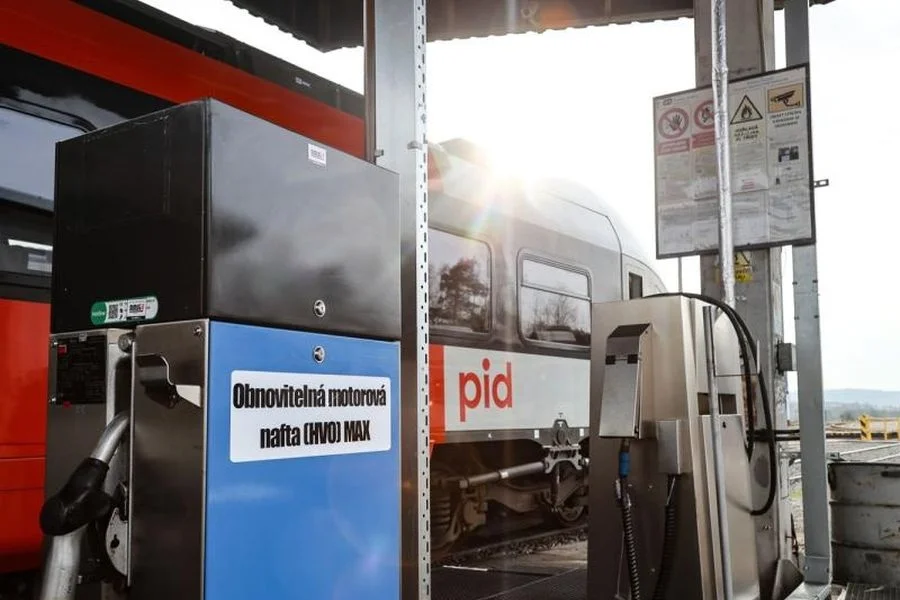
Foto: České dráhy
HVO stands for “Hydrotreated Vegetable Oil”. The fuel can be produced from vegetable oils, used cooking oils or other waste fats. Compared with conventional diesel, it is expected to have a significantly better greenhouse gas balance.
“Our aim is to further expand the electrification of the Czech rail network and reduce local emissions from combustion engines,” said Jiří Ješeta, Deputy Chairman of the Board of Directors of Czech Railways and responsible for passenger transport. However, a large part of the rail network remains unelectrified. According to Ješeta, trains there are likely to continue operating with combustion engines for several more decades.
Following a successful trial with a 20 per cent share of HVO, the railway can now test a fuel based entirely on hydrotreated vegetable oils for the first time. According to the company, this is the first trial of its kind by a Czech railway operator.

Foto: České dráhy
Test on Routes around Rakovník and Beroun
The project, launched in 2024, initially examined suitable fuel mixtures and the legal requirements. RegioFox trains were then tested at the Velim railway test centre using diesel and different proportions of HVO. The tests focused on performance, consumption and emissions.
Since April 2025, three units have been operating with a mixture of diesel and 20 per cent HVO on the Rakovník–Beroun and Beroun–Prague routes. Following the positive results, the trial is now being continued using pure HVO fuel.
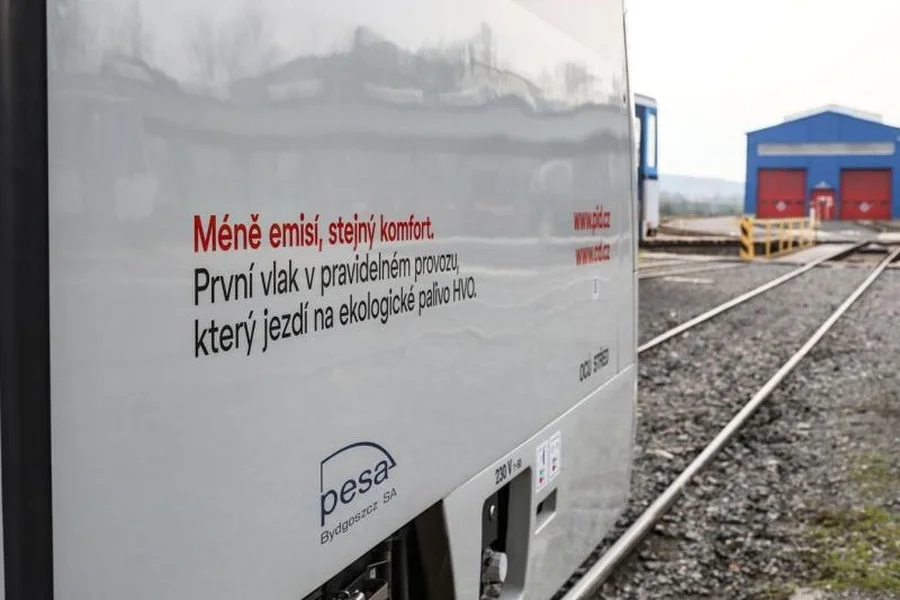
Foto: České dráhy
Emissions Balance Depends on the Raw Material
HVO is processed using refinery methods so that its chemical properties largely correspond to those of fossil diesel fuel. It is compatible with conventional diesel and can therefore either be blended with it or – in appropriately approved engines – used in its pure form.
How climate-friendly the fuel actually is depends primarily on the raw materials used and how it is produced. If HVO is produced from vegetable oil grown specifically for this purpose, greenhouse gas emissions can be reduced by around 60 to 65 per cent compared with fossil diesel, according to Czech Railways. When used vegetable oils and fats are utilised as waste materials, savings of 90 to 95 per cent are possible.
More from Business

Over One Million Cars Already Produced in the Czech Republic in 2026