

Foreign Nationals Make Up a Quarter of Prague’s Population
Without international migration, the population of the Czech capital would decline over the long term
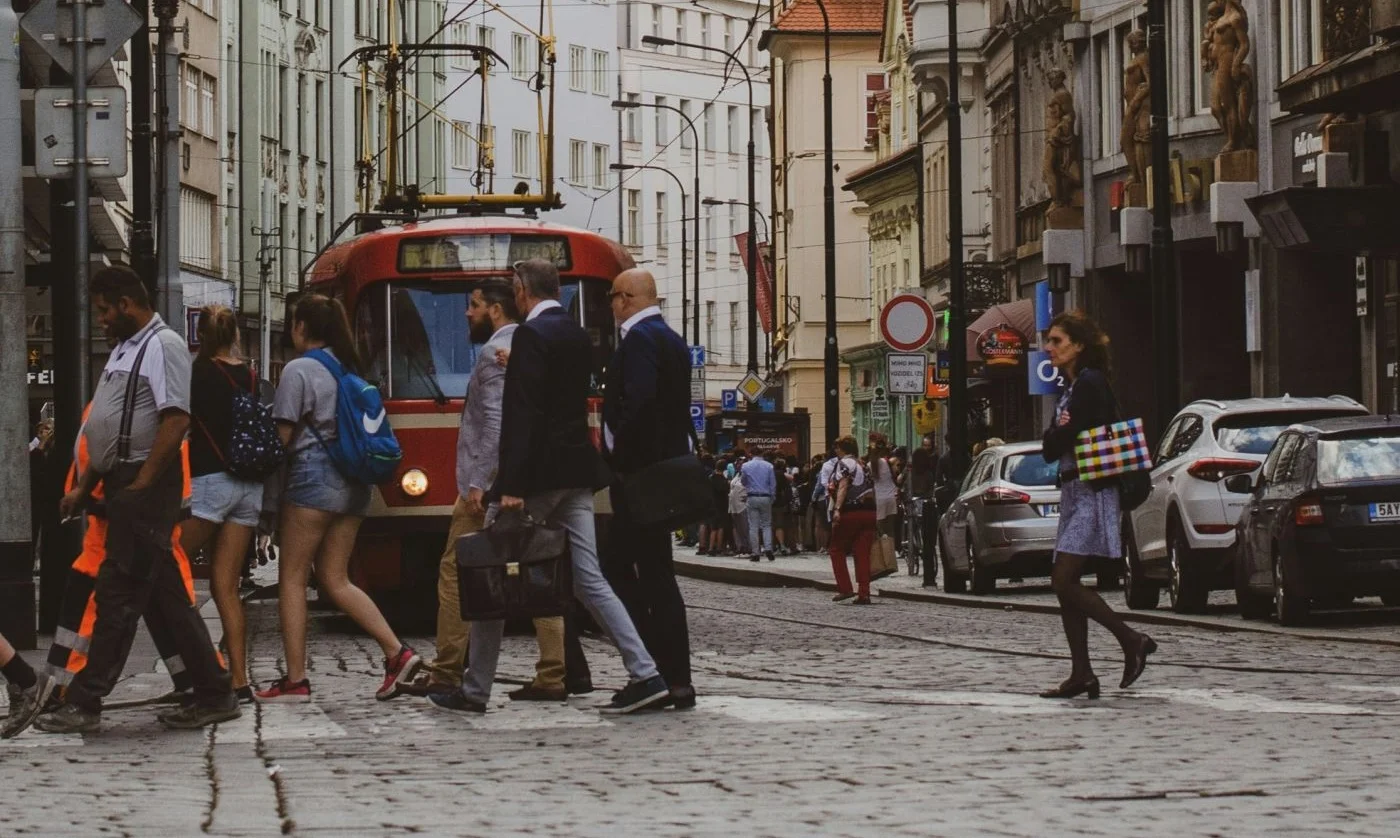
Photo: Zbyněk Polák | Unsplash
Prague’s demographic trends are increasingly shaped by foreign nationals. A new study highlights their importance to the capital’s economy and demographic development – and identifies challenges for future urban planning.
Foreign nationals have become an essential part of Prague’s development. This is revealed by a new study from the Prague Institute of Planning and Development (IPR Praha). While the number of residents with Czech citizenship has stagnated or declined slightly over the long term, the number of foreign residents has increased almost sixfold since 2001. Today, they account for around a quarter of Prague’s population.
Between 2001 and 2024, their number rose from around 61,000 to 354,000. By 2050, more than 600,000 foreign nationals could be living in Prague. Without their arrival, the capital would lose residents over the long term, according to the study. International migration is also expected to remain a major factor shaping future demographic trends.
Ukrainian nationals form the largest group
The war in Ukraine triggered a particularly large influx in 2022. The number of Ukrainian nationals in Prague rose to around 168,000. By the end of 2024, they therefore accounted for almost half of all foreign residents in the capital.
Other large groups include Slovak nationals, accounting for around nine per cent of the foreign population, Russian nationals at seven per cent and Vietnamese nationals at 4.5 per cent.
An important contribution to the economy and demographic development
“International residents are an important part of Prague’s economy. They work both in highly skilled professions and in sectors without which the city would struggle to function on a daily basis – construction, retail, the service sector, hospitality and administration,” says Petr Hlaváček, Prague’s Deputy Mayor for Urban and Strategic Development.
At the same time, foreign residents help to lower the average age of Prague’s population and increase the number of people of working age. Their average age is around 35.5 years. By comparison, the average age of Prague’s population as a whole is almost 42.
However, IPR Director Ondřej Boháč warns against viewing international migration solely as a source of young workers.
“In the long term, we cannot view international migration solely as a source of young workers. The people arriving today will gradually grow older in Prague. The question for the future is therefore not whether Prague will be an international city – Prague already is one. The central challenge is to manage this change well, in other words, to plan housing, schools, services and infrastructure so that the city continues to function for all its residents and social cohesion is maintained,” explains Boháč.
Greater diversity, spatial segregation remains low
The study also shows that increasing diversity has so far not been accompanied by significantly greater spatial separation between population groups. Most foreign residents live across the city and are gradually becoming part of everyday life in Prague.
Although they are more concentrated in some areas than in others, the overall level of spatial segregation remains low.
Participation in community life makes it easier to learn the language and improves educational and employment opportunities. At the same time, it can prevent social inequalities from worsening.
It is therefore important for Prague to identify potential new barriers at an early stage. Affordable housing, accessible services and opportunities for people to meet are intended to help ensure that all residents can participate in city life.