

Czech Republic Plans Significant Increase in HGV Tolls from July 2027
Toll rates for heavy goods vehicles are to be brought into line with those in neighbouring countries – buses are exempt from the planned increase
Photo: Ministerstvo dopravy ČR
The Czech Republic plans to significantly increase toll charges for heavy goods vehicles. Higher rates are set to apply from July 2027, with the aim of making international transit traffic contribute more towards the costs of road infrastructure.
The Czech Ministry of Transport has submitted a draft amendment to the existing toll regulation for interministerial consultation. The new charges are due to take effect in July 2027 for vehicles weighing more than 3.5 tonnes. Buses are exempt from the planned increase, and their toll rates will remain unchanged.
The aim of the reform is to bring toll charges for heavy goods vehicles more closely into line with those in neighbouring countries. According to the Ministry of Transport, the comparatively low toll rates in the Czech Republic have led international haulage companies to increasingly route their journeys via Czech motorways.
Transport Minister Ivan Bednárik described the Czech Republic in this context as something of a low-toll island in Central Europe. Charges are not only lower than those in Germany and Austria, but also below the levels in Slovakia and Hungary. As a result, international transit traffic is being deliberately diverted onto Czech roads.
On the key transit motorways D1, D5 and D8 in particular, the number of heavy goods vehicles has risen by more than 15 per cent overall since the COVID-19 pandemic. According to the minister, it is therefore time to bring toll rates at least into line with those in some neighbouring countries.

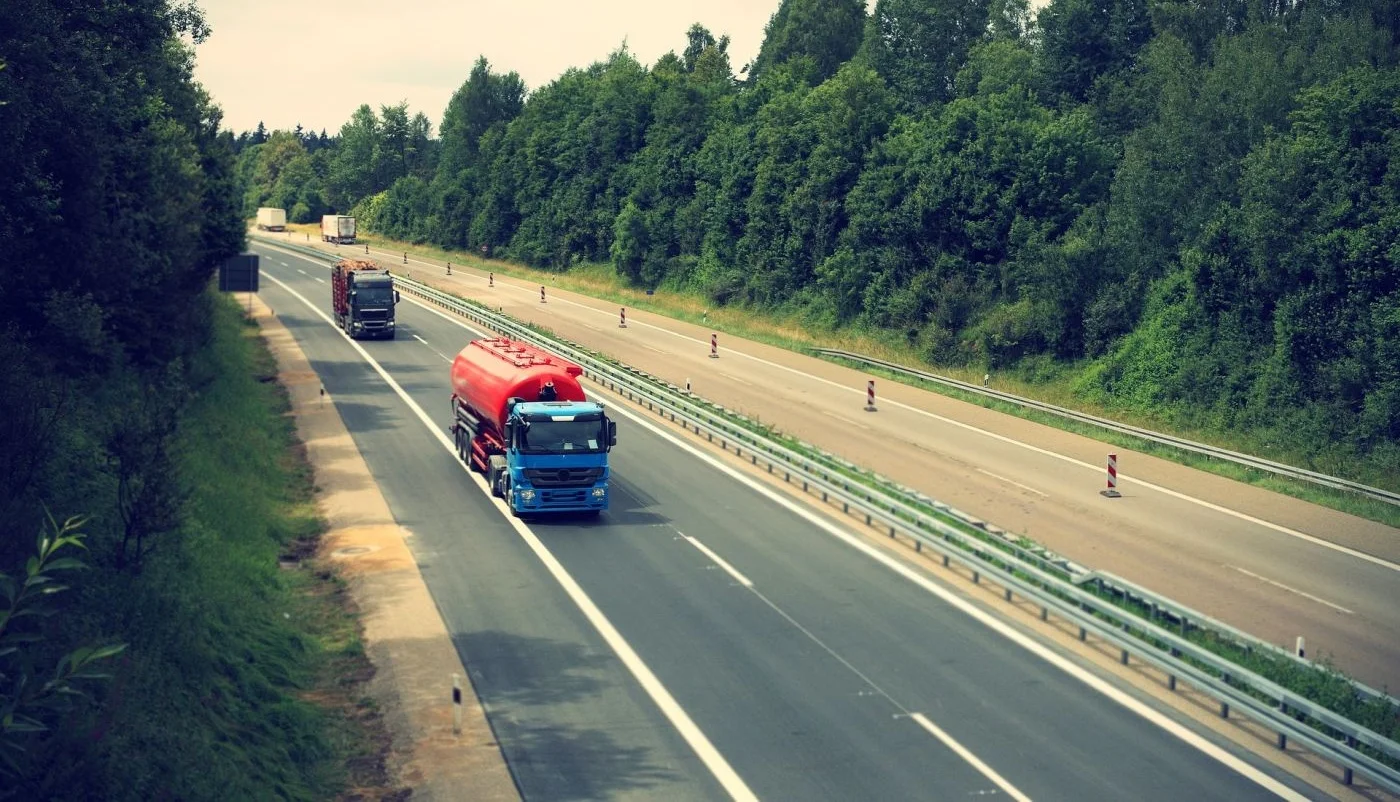
Foto: ŘSD ČR
Motorway Tolls for Heavy Goods Vehicles to Rise by Around 19 Per Cent
For the most commonly used category of heavy goods vehicles – vehicles weighing more than 12 tonnes with at least five axles, Euro VI emissions classification and CO₂ class 1 – the draft proposes an 18.52 per cent increase in motorway tolls. On first-class roads, charges are set to rise by as much as 26.6 per cent.
On motorways, the toll rate would therefore increase from the current approximately CZK 5.96 to CZK 7.07 per kilometre. This represents an additional charge of around CZK 1.10 per kilometre. On first-class roads, the planned increase amounts to approximately CZK 0.97 per kilometre.
A comparison with selected neighbouring countries reveals significant differences in toll charges. In Austria, the toll for the corresponding vehicle category is equivalent to CZK 13.85 per kilometre, compared with CZK 8.42 in Germany. In Slovakia, the charge is CZK 6.48 per kilometre, while in Poland it is just CZK 3.14 per kilometre.
The ministry illustrates the impact of the increase on individual journeys using the example of a trip from the Slovak to the German border. For the route from the Lanžhot border crossing via the D2 and D1 motorways, a section of the Prague Ring Road and the D5 to Rozvadov, a heavy goods vehicle in the corresponding category currently pays CZK 2,565. From July 2027, under the proposed changes, the charge would rise to CZK 3,040 – an increase of CZK 475.
Up to CZK 4 Billion in Additional Revenue per Year
The Ministry of Transport also has significant financial expectations associated with the planned increase. Toll revenue is expected to rise by around CZK 1.6 billion in the second half of 2027 alone. For subsequent years, the ministry anticipates additional revenue of approximately CZK 4 billion annually.
The funds are to be invested in the expansion and modernisation of transport infrastructure. In addition to new roads and motorways, the money could also be used to finance additional motorway service areas.
Transport Minister Bednárik has dismissed concerns that higher toll charges could lead to significant increases in consumer prices. Based on his own experience in the transport industry, he is convinced that tolls account for only a relatively small proportion of overall transport costs. In his assessment, the impact on the prices of individual goods would amount to just a few hellers.
The draft is currently undergoing interministerial consultation. Once the review has been completed and any objections have been addressed, the proposed amendment will be submitted to the government for a decision.
More from Business
Prague Plans to Purchase Up to 140 New Battery Trolleybuses